
Buying or renting a home is one of the most emotional decisions a person will ever make. It’s hope, anxiety, compromise, and occasionally, pure joy.
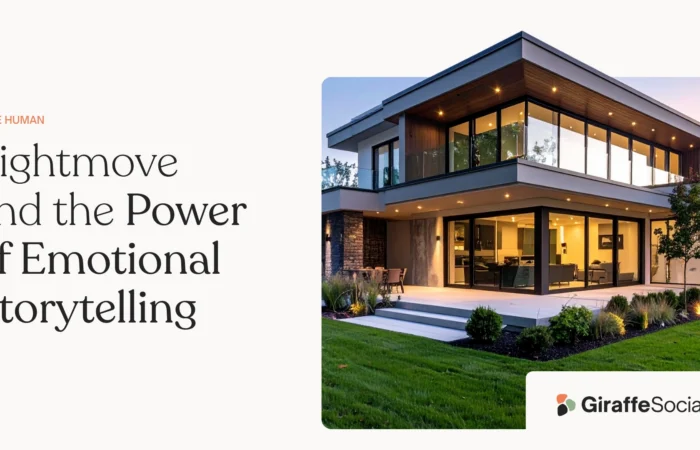
Rightmove is the UK’s leading property portal, and their paid media proves they understand human-first marketing. The “Believe It” TV campaign is emotionally led, story-driven, and rooted in real human experiences that an audience can relate to.
But, like many property brands, this emotional response is sometimes lost in a sea of aesthetic property photos when it comes to their social media approach.
This edition looks at what they’re getting right, where the disconnect is, and how to bring that same emotional intelligence into their organic social.
Who is Rightmove?
Rightmove is the UK’s largest online property portal, launched in 2000. Listed on the London Stock Exchange as part of the FTSE 100, it’s a household brand name that has become so embedded in everyday life that its name is used as a verb – people don’t search for properties, they “go on Rightmove.”
Over 80% of all time spent on property portals in the UK happens on Rightmove. Their audience spans first-time buyers, renters, upsizers, downsizers, and everyone in between. Not only do they list properties, but their platform offers resources from mortgage tools and local sold prices to rental guides and school information.

What’s Working?
For a brand of Rightmove’s size, it would be easy to take a one-size-fits-all approach to social media. They don’t.
Their TikTok presence feels genuinely platform-native, with lo-fi, trend-led content that is clearly created with a Gen Z and millennial audience in mind. Rather than repurposing polished brand content, they lean into the way younger audiences actually use Rightmove: window shopping for dream homes, manifesting their next move, and playfully engaging with property. It works because it doesn’t feel like a brand trying too hard.
Their TV advertising takes a more emotional approach. The “Believe It” campaign is emotionally led and story-driven, built around real human moments that capture what moving home actually feels like. Rightmove shows they understand the emotional weight of the decision, and this helps the audience relate to the brand from more than just a practicality point of view.
And across their channels, there’s a clear understanding that different platforms serve different purposes. LinkedIn leans into the business side, showcasing events, sponsorships, and the people behind the brand. Instagram functions more as a lookbook, leading with aesthetic property photos. The fact that they’re not posting the same content everywhere shows a level of strategic thinking that a lot of brands at this scale haven’t got right.

Where it’s Falling Short
Where Rightmove has an opportunity to grow is in bringing the emotional intelligence of their TV campaigns into their day-to-day social content.
The “Believe It” TV campaign understands that buying or renting a home isn’t just a transaction, it’s a life moment. But when you scroll through their Instagram, that feeling largely disappears. What you find instead is carousels of beautiful, aspirational properties that exist more as fantasy than reality. Without the human story behind the image – who found it, what it meant, what they had to believe to get there – audiences just scroll past and don’t build much brand association.
The properties being showcased are also often out of reach for the majority of their audience, which creates a subtle distance between the brand and the people it exists to serve. A first-time buyer in the Midlands doesn’t see themselves in a five-bedroom cottage in the Cotswolds listed for £2.3M.

How We’d Approach It
The good news is that Rightmove already has everything they need. The emotional storytelling is there in their TV campaigns. The influencer relationships are there on TikTok. The audience is there, and they’re already engaged. It’s just about connecting the dots.
Bring “Believe It” To Organic Social
The emotional storytelling behind the TV campaign is exactly the kind of thinking that makes scroll-stopping social content. You don’t need a film crew to replicate it, just an ability to relate a moment to an emotion. Using a caption that asks “what was the moment you knew this was the one?” speaks to someone’s experience, rather than focusing on how many bedrooms a property has, or how close it is to the motorway. The feeling people get when they find the right home is one of the most shareable, saveable emotions there is. We would ensure that Rightmove owns its place in that conversation on social media just as they do with their TV ads.
Make The Properties Feel Personal
Rather than letting the images do all the talking, we would add a human layer. When posting an image of a beautiful kitchen, we’d make sure to tell the story behind it – the couple who bought their first home together after three years of saving, or the family who finally found a kitchen big enough for them to all eat dinner together each night. This could be done through UGC style video clips, or even through images of properties with captivating captions that don’t just say “4 bed detached, offers over £450,000.” We would encourage more images of properties with actual people in them, not just the aesthetic photos pulled from property listings.
Let Real Voices Lead
Rightmove’s influencer work on TikTok and Instagram is a great start, but there’s opportunity to expand this even further to put human-first marketing at the centre of the strategies. Content featuring estate agents sharing what buyers are really asking in viewings, or first-time buyers documenting the moment they got their keys, brings instant relatability and authenticity to the content that pretty pictures of expensive homes don’t achieve. This kind of content builds trust and emotional connection, and it positions Rightmove not just as a place to find homes, but as a brand that understands the journey of finding one.
Ready for More?
These human-first marketing deep dives are part of our LinkedIn series where we explore established brands, what they’re doing right, and how they could make changes.
If you want more of these, you can see the deep dives two months earlier than they appear on the blog!
Just subscribe to the Made Human LinkedIn Newsletter to stay in the loop with future deep dives!