

How DC Comics Are Superheroes of Social Media
DC Comics burst into life in 1934 as National Allied Publications. Started by writer Malcolm Wheeler-Nicholson, the company published the first comic book constructed of brand new material in 1935, and followed it up with the first Superman story in 1938. They didn’t formally adopt DC Comics as the official company name until 1977, long after the introduction of favourites such as Batman and Wonder Woman. Fast forward to 2020, and the small comic book company has evolved into a billion-dollar enterprise. With multiple projects and a huge following, DC Comics are almost certainly one of the biggest entertainment companies in the world. It’s no wonder, then, that they have one of the biggest social media followings we’ve ever seen.
Which Social Media channels do DC Comics use?
DC Comics use these channels for their social media strategy:
- Facebook: 6.4M likes
- TikTok: 2.5M followers
- Instagram: 13.4M followers
- X: 6M followers
- YouTube: 4.88M subscribers
DC Comics have a lot going on. With comics, books, movies, TV shows and games all included in their arsenal, they’ve got a stack of great sources for content – and they definitely take advantage. They’ve got a really great, robust social media presence across a number of channels, with a huge following. Let’s take a closer look at what they’re doing.
Holy Smokes, that’s some great content!
You can divide the social strategy into two categories for DC Comics – and they’re winning at both. Firstly, their content across all platforms is engaging, entertaining, interesting and diverse. They have a few winning formulas which engage their millions of followers and keep them coming back for more.
They utilise videos and trailer teasers
DC Comics know how to use video content well, and they do it cleverly across all of their social media accounts – but in several different ways. Nothing generates interest in a brand or product like a little teaser, and DC offer their fans and followers plenty of sneak peeks at upcoming TV shows and movies, mainly across Facebook and YouTube. These posts are incredibly popular, and are usually the most viewed and commented on – interaction levels often reach into the hundreds. It’s hardly surprising – after all, who doesn’t love a trailer?

The DC YouTube account is exceptional. They post regularly, a few times a week, and vary the content to keep things interesting. There’s a great balance between trailers, gag reels and bloopers, interviews and behind-the-scenes peeks with actors, clips from cartoons, and even interviews with comic book artists. There are even separate playlists for DC Kids and computer game content. The DC YouTube account is cleverly managed to appeal to as many people as possible, which is evident in the view counts; it’s not unusual for a video to receive more than 200,000 views and thousands of likes.
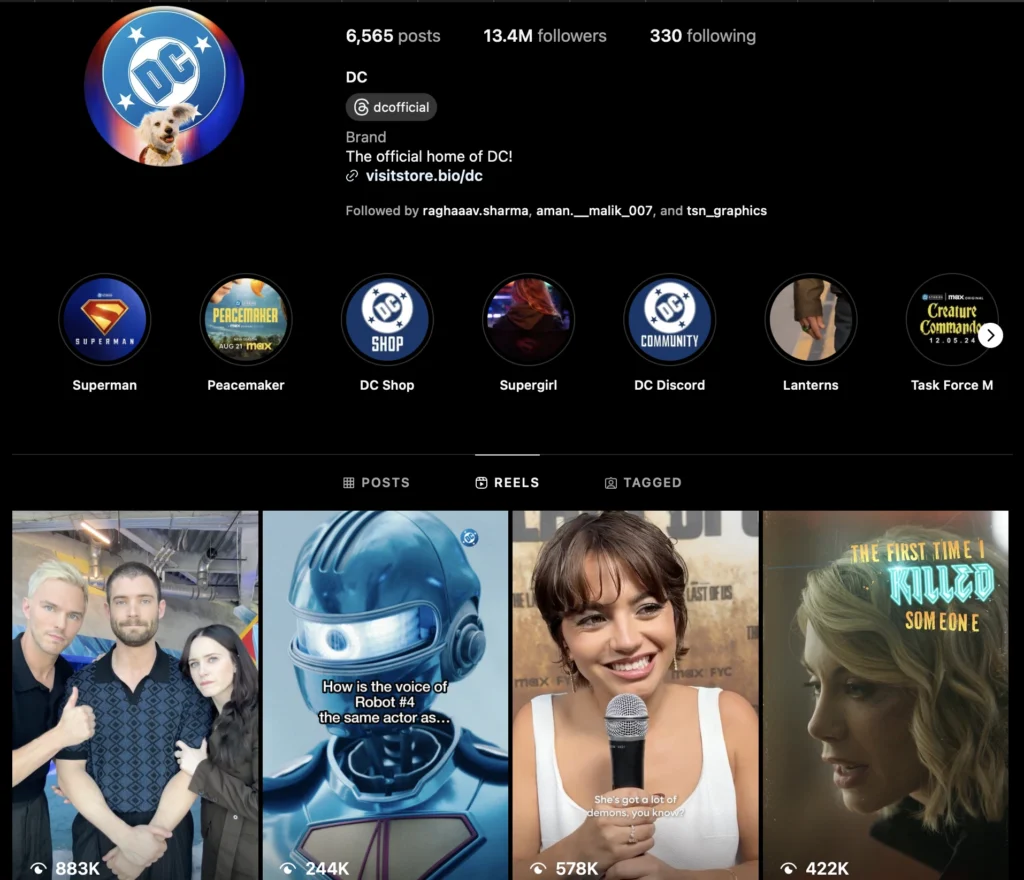
Over on Instagram, DC is on top of their Reels game. They’ve fully embraced the format, posting high-impact clips including trailers, behind-the-scenes moments, and fan-favourite character features, many of which gain hundreds of thousands of views. Their content is polished, snappy, and perfectly tailored for mobile-first engagement. DC also makes smart use of Instagram Highlights, neatly categorising content into themes like movies, shows, characters, and fan art, making it easy for followers to dive deeper into their universe at any time.
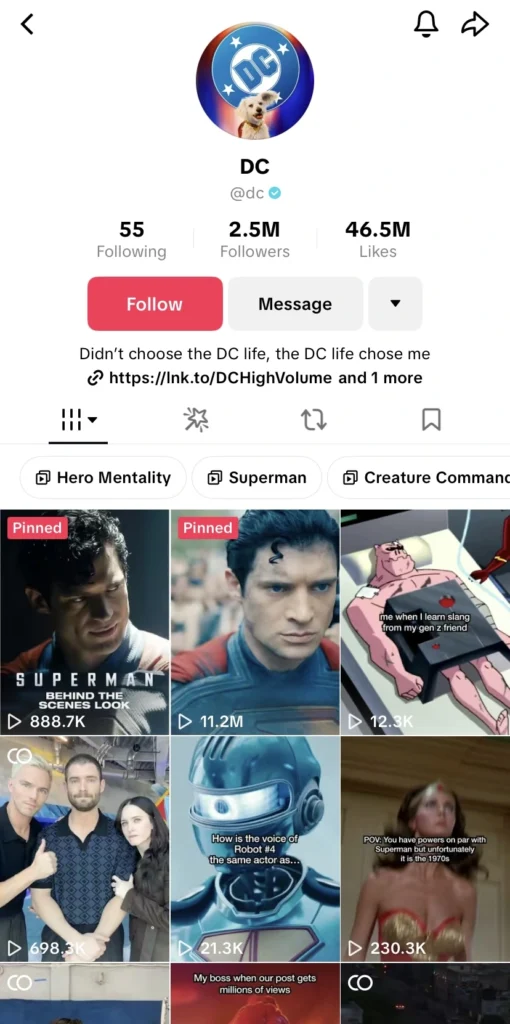
On TikTok, DC keeps the hype alive with slick, cinematic teaser trailers. Their short-form content is tightly focused on upcoming releases, using high-impact clips to spark buzz and fan anticipation. Rather than flooding the feed, DC takes a quality-over-quantity approach, dropping polished, exclusive-feeling content that ties directly into their blockbuster releases which keeps audiences engaged.
They celebrate history with vintage content
History is an important part of any long-running brand, and DC Comics are clearly proud of theirs. As well as generating interest in new releases, they work hard to show off the origins of the company. Posts are often made up of extracts from old comics and stills from vintage TV shows. (Does anyone else remember watching the reruns of the 1966 Batman TV series on a Sunday morning? Great stuff!) This works on two levels. Firstly, it’s great for spreading brand awareness and educating newer followers, who might not be aware of the brands roots. Secondly, it’s a brilliant way to engage older comic and movie fans who’ll enjoy a touch of nostalgia and a trip down memory lane.
They shine a light on actors and actresses
Die-hard superfans might know the Flash inside out, but chances are they don’t know much about the actor who dons the famous red suit. DC Comics are great at using actors and actresses to generate brilliantly entertaining content. They mix it up with posts celebrating birthdays, short videos with messages from the stars, and behind-the-scenes footage. This is a great tool for engaging an audience, as they’re given the opportunity to find out more about both them, and the character they’re playing. A winning combination!
They use National Holidays
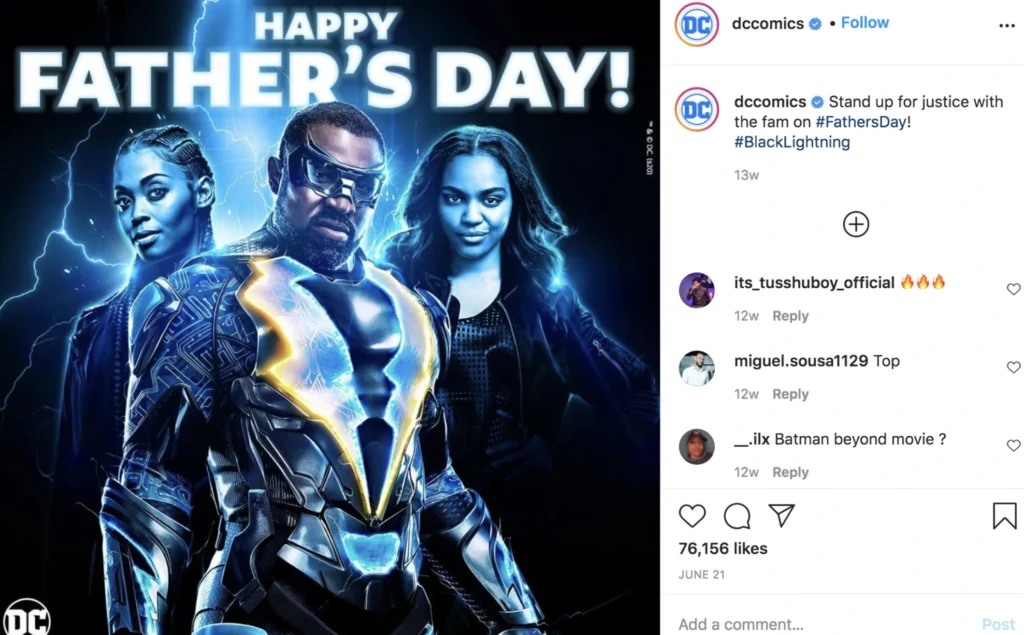
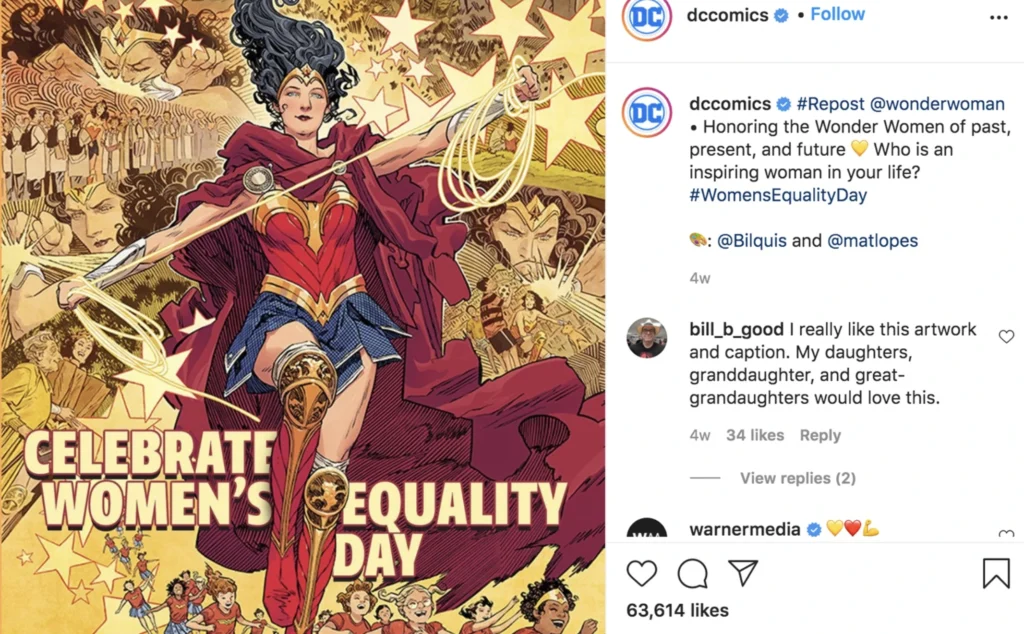
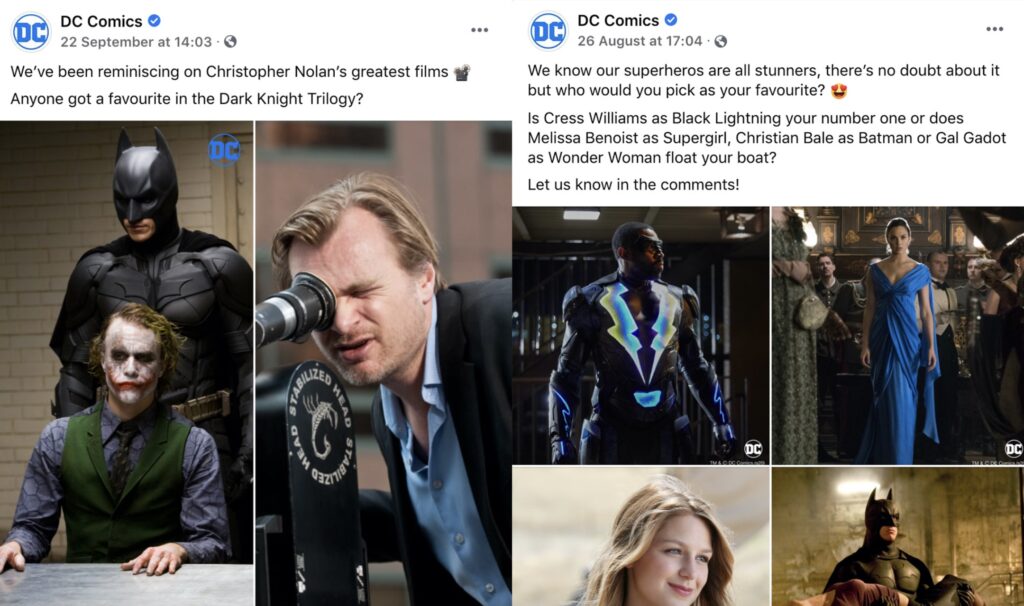
DC are great at using their own resources to join in with National Day celebrations. Black Lightning appeared for Father’s Day 2020, and then followed it up a couple of months later with a Wonderwoman post for Women’s Equality Day. Both did incredibly well, with tens of thousands of likes and plenty of comments.

They have hero level community management
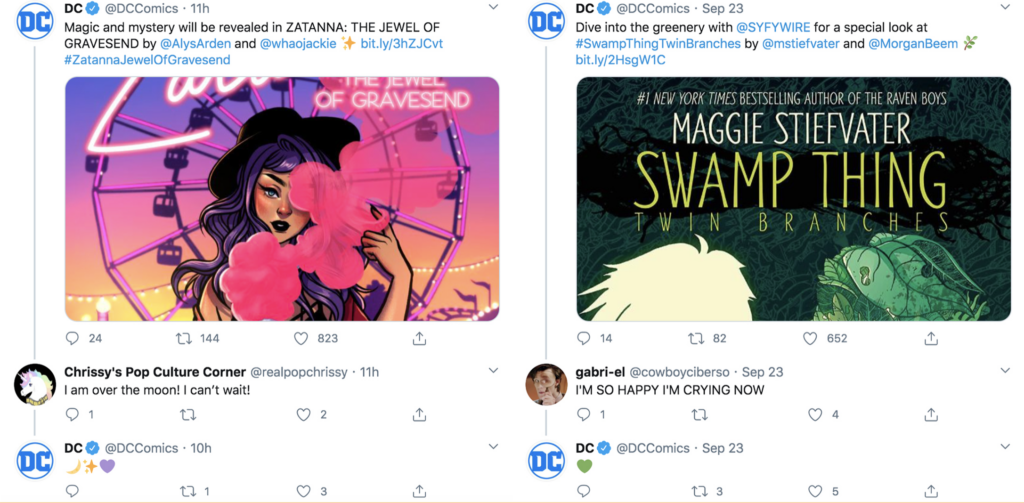
The second reason DC Comics are successful on social media is because they’re pretty great at community management. Across all channels, they interact with their followers, keep the tone light and friendly and put a lot of thought into what their audience is going to enjoy. They’re also not afraid to throw in an emoji – and we know people love an emoji! On Twitter, they spend time chatting with fans, retweeting other DC accounts and sharing content from actors and actresses – three winning ways to engage an audience. Over on YouTube, they’ve created an entire community section packed full of quizzes and polls, which get tens of thousands of likes and a pretty great response level. They also put out specific posts asking for peoples opinions on everything from thoughts on villains to favourite movies. This is a simple but effective tool brands use to engage their audience, and make their content travel further.
Editor’s note: This article was published in 2018 and has been updated for accuracy and relevance in June 2025.