
What Makes Content Valuable to Teachers vs Parents vs Learners: A Practical Guide for Education Marketers [INFOGRAPHIC]

Creating educational content that genuinely resonates requires more than simply knowing your subject. Like marketing in any niche or industry, you need to have a deep understanding of who you’re speaking to.
Teachers, parents, and learners each engage with educational content for very different reasons, with their own emotional triggers, priorities, and expectations. What inspires a teacher to save a resource for the classroom may not be what drives a parent to share a post, and neither of those will necessarily appeal to a student scrolling on their phone after school.
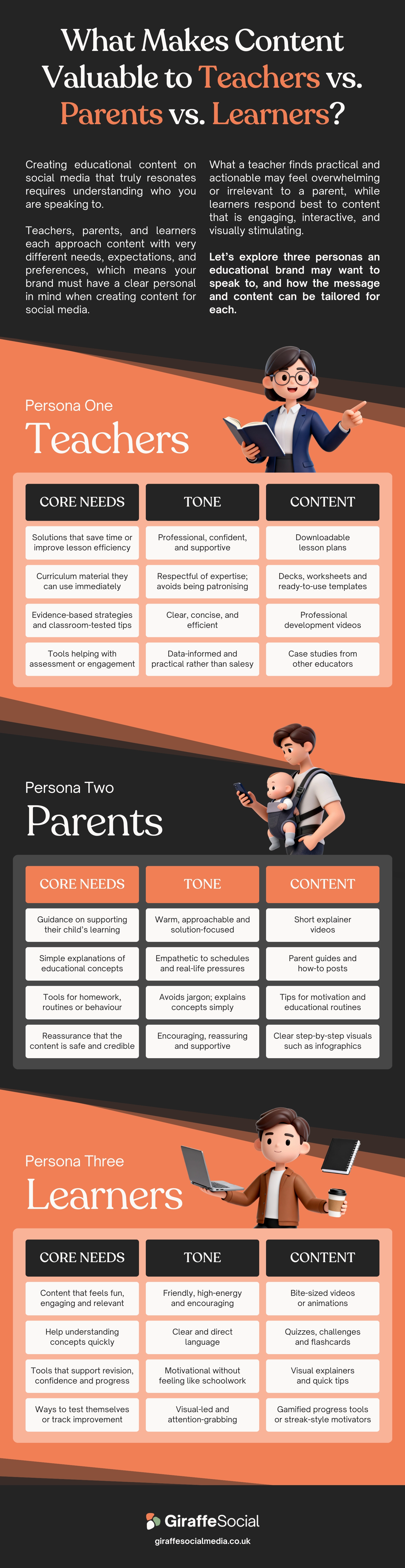
In this article (and accompanying infographic!), we’ll explore what defines valuable content for each audience, how to tailor your tone and format effectively, and how education brands of all sizes can create high-performing social content that feels relevant rather than generic.
Understanding Your Three Key Audiences
Educational marketing is one of the very few niches where you can see a very clear breakdown of the audience segments. With the difference in needs, ages, and general demographics, these differences allow marketers to tailor the message for each audience.
So before creating content, you must understand the motivations behind each audience’s behaviour. These groups overlap in the broader educational ecosystem, but their content needs are sharply distinct.
What Teachers Value in Educational Content
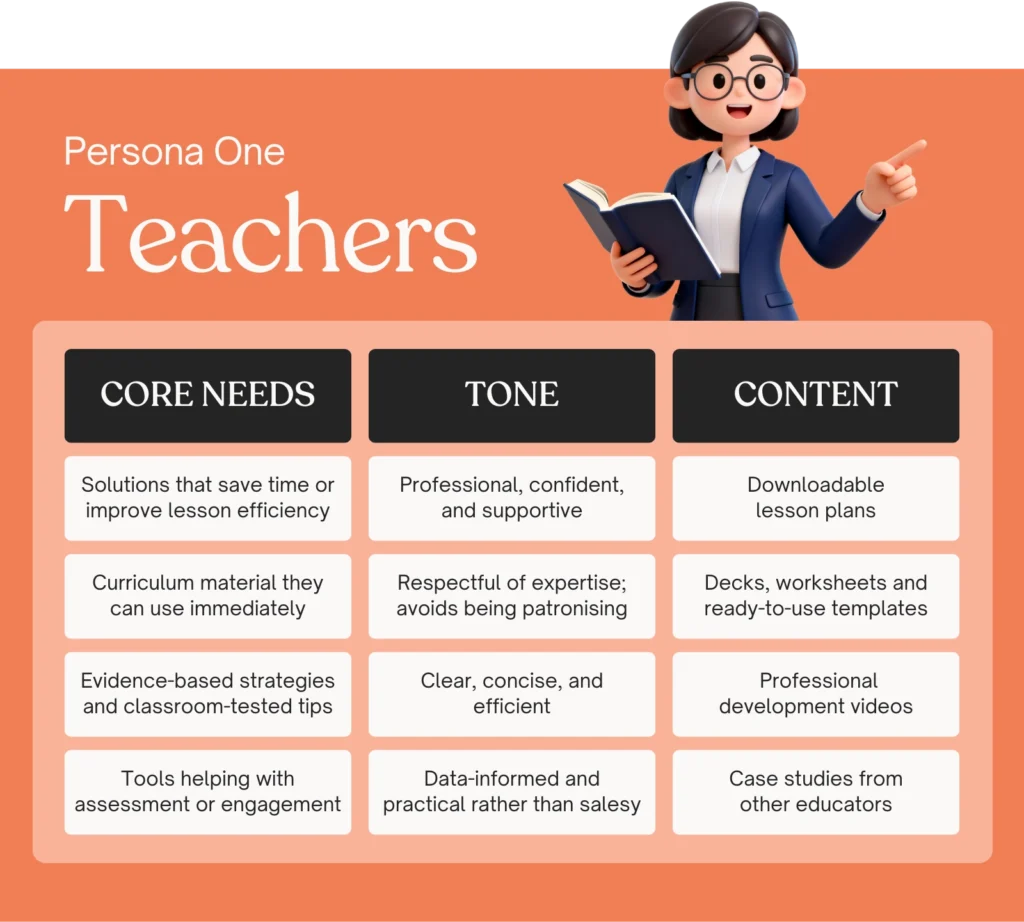
Teachers are habitual problem-solvers, often working under intense time pressure. When browsing content based on their job and responsibilities, their consumption is focused on practicality, efficiency, and credibility.
They’re looking for tools, guidance, and resources that will help them streamline their teaching. With this in mind, your content must be tailored to the needs of teachers if you’re looking to appeal to them.
What Teachers Need
Teachers increasingly rely on digital tools to streamline planning, differentiate instruction, and support learners with diverse needs. They look for things that save time, cut down administrative work, or help them deliver lessons more effectively.
Reports from organisations like TeacherTapp show that teachers gravitate toward resources that are immediately usable in the classroom and offer clear, curriculum-aligned value. This report also suggests that teachers don’t purchase from brands, but rather from other teachers.
The Tone That Works for Teachers
Teachers respond best to confident, respectful communication that recognises their expertise. They’re quick to disengage from messaging that feels patronising or overly promotional.
Content supported by evidence or classroom-tested insight, such as reports from the Education Endowment Foundation, performs far better than vague advice. The upshot of this is that when creating content to appeal to teachers, it must be insightful, educational, and reliable.
The Content Formats Preferred by Teachers
Because teachers value efficiency, the most effective formats are those that can be applied instantly.
These types of content include:
- Ready-to-use lesson plans, worksheets, and templates
- Personal development style videos
- Research-backed blog posts
- Case studies of real classroom experiences
- Practical frameworks or checklists they can use tomorrow
Teachers don’t just consume content—they implement it. The easier you make that process, the more valuable your content becomes.
What Parents Value in Educational Content
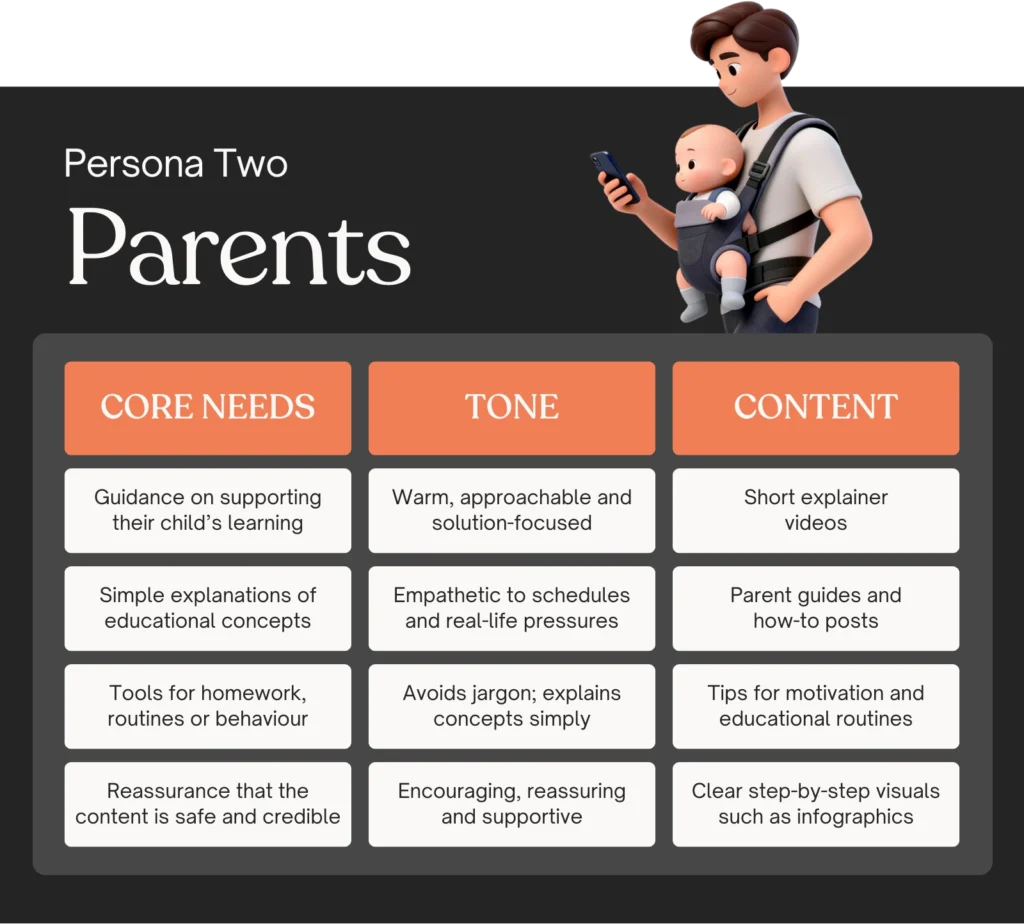
Parents engage with content emotionally before they engage practically. Their primary motivation is supporting their child’s learning and well-being without feeling overwhelmed.
What Parents Need
Parents look for credible, simple guidance that helps them navigate homework, behaviour, routines and educational milestones. According to Pew Research (https://www.pewresearch.org), parents often rely on social media for tips, reassurance, and communities of shared experience.
The Tone That Works for Parents
Parents respond best to warm, empathetic, jargon-free messaging. They want to feel supported, not judged. The tone should acknowledge real-life pressures, from limited time to uncertainty about how to help with schoolwork.
Avoiding heavy terminology is crucial. When making content appealing to parents, ask yourself whether or not you’d expect the average parent would understand the words and terms you’re using. If the answer to this is no, then those words do not belong in the content.
The Content Formats Preferred by Parents
Parents engage most with visually clear, easy-to-follow content that provides some form of value, whether that’s educational, time-saving, or anything else.
These types of content include:
- Short explainer videos
- Printable guides
- Infographics
- Step-by-step visuals
- Simple “how to support at home” posts
Anything that feels too long, too technical, or too time-consuming tends to be ignored by parents.
What Learners Value in Educational Content
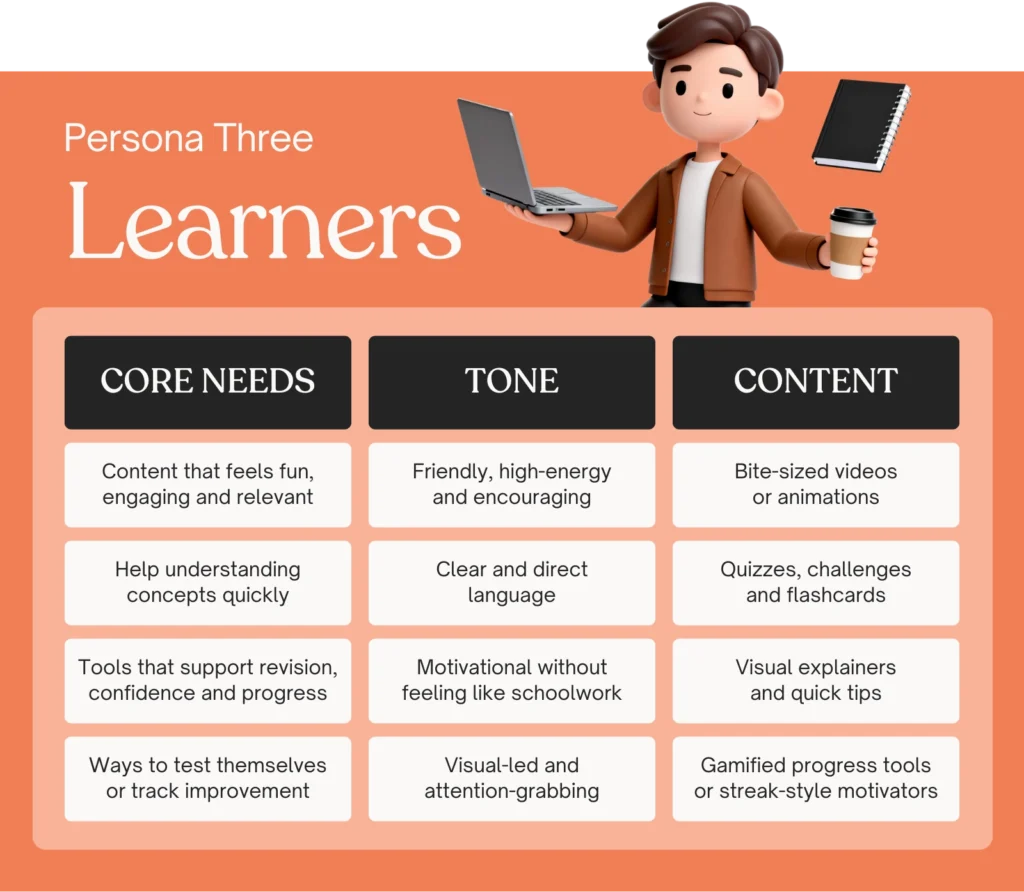
Learners, especially school-aged students, are motivated by relevance, immediacy and engagement. They want content that helps them understand concepts quickly while maintaining their attention.
Much like the parents audience, this should be generally free from over-technical jargon. However, depending on the subject you’re discussing, some jargon can be present, as the students will likely be familiar with the terminology.
What Learners Need
Students respond to content that breaks down information into digestible, visual, and interactive formats. They want to feel empowered, not lectured. Their needs revolve around speed, clarity, and stimulation.
The Tone That Works for Learners
The tone should be warm, friendly, and high-energy, with clear, concise instructions. Learners prefer content that guides but never condescends. Think short sentences, bright visuals, and conversational language.
The Content Formats Preferred by Learners
When creating content for learners, you should focus on short, engaging posts that break down difficult concepts.
These types of content include:
- Bite-sized videos
- Animated explainers
- Quizzes and flashcards
- Challenges or micro-tasks
Conclusion
Understanding what makes content valuable to teachers, parents, and learners is the foundation of effective educational marketing.
These groups may all be part of the same ecosystem, but their expectations of tone, format, and utility differ dramatically. When brands tailor their content (instead of just forcing a one-size-fits-all approach), they immediately increase relevance, trust, and engagement.
Whether you’re building a campaign, designing social content, or publishing educational resources, aligning your messaging with the needs of your audience will ensure you reach the right people, with the right message, at the right time.
The Audience Persona Infographic
Want to save a cheatsheet of all the info above? Be sure to save our infographic so you can keep coming back to it!