
Most challenger banks aren’t failing on TikTok because they’re not using it – they’re failing because they’re using it wrong.
And that’s an issue, because this is a space where their ideal audience already exists. 1 in 3 UK users now use TikTok to learn about personal finance, 2 in 5 (41%) encounter banking content on their ‘For You’ feed, and 73% say TikTok makes it easier to talk about money openly.
The problem lies in the gap between what most challenger banks are publishing and what audiences actually find valuable. 84% of the video content released by brands on TikTok fails to generate strong positive emotions, capture attention, or enhance brand recall.
In this article, we’ll break down exactly why most challenger banks are not seeing success on TikTok, and the strategy shifts they should take to fix this.
Why Most Challenger Bank TikToks Flop
Before we can fix the issue of TikTok content that flops for challenger banks, we must understand what’s causing it to fail. For most brands, it’s not one thing they’re doing wrong; it’s usually a misunderstanding of the platform and their audience that leads to content not getting the desired traction.
Content is Too Salesy
This is a common trap many challenger banks fall into: they create content purely to promote their products and services, without considering the value they’re offering their audience on TikTok.
Posts are created to focus on service features, product walk-throughs and content is repurposed from campaigns that haven’t been designed specifically with a TikTok user in mind. What the brands are forgetting is that TikTok has an entertainment-first algorithm that values engagement over brand importance. If the audience doesn’t have a reason to engage with the content, the algorithm won’t push it out.
Lack of Understanding of TikTok Culture
Often, the reason content feels too promotional or salesy is that the bank doesn’t understand the culture behind successful TikTok content. TikTok has its own language in terms of tone, pacing, humour, and editing style, which many brands completely misinterpret.
Highly polished brand videos and repurposed content from other campaigns are flooding feeds, and trend responses feel forced. Consequently, content feels out of place on a user’s feed, and the audience scrolls past without taking notice of it.
What TikTok actually rewards is lo-fi, relatable content that taps into cultural moments promptly. Profiles that are actively engaging and joining in conversations that take place within the platform are the ones that see success.
Legal Constraints and Misunderstanding
Challenger banks use financial regulations and constraints as a convenient excuse to play it safe and not utilise the strategies that they should. “Content approval typically involves script review, compliance assessment, legal consultation if needed, final approval by qualified principals, and documentation of the approval process for regulatory record-keeping purposes.”
Challenger banks respond to these constraints with overly formal language, stripping out personality and avoiding cultural participation altogether. The result is boring, lifeless content that doesn’t fit the platform.
Achieving compliance can cause a bottleneck when trying to create regular content for TikTok. But guardrails can be used to ensure content works within these constraints, meaning brands can still utilise it effectively.

Lack of Posting Frequency
Brands within the financial industry blame regulations for the lack of regular posting, but that’s not the whole story.
The TikTok algorithm is a volume and iteration game. To understand who the target audience is, brands need to provide data signals, and these signals are created by posting more content. The algorithm (and marketers) can’t deduce insight from a single post; both need to see patterns in behaviour to understand what an audience responds to, and thus what content should be created going forward
So often challenger banks post only a handful of videos, hoping for that viral hit, and if that’s not successful, they abandon or deprioritise the platform. Many brands expect to see ROI before they’ve even built a presence on the platform.
No Emotional Response from Content
Emotional response should be at the core of every piece of content, but in reality, this is the biggest element brands forget.
A lot of challenger bank content is informative and “useful” in theory, but it lacks any emotion, tension or relatability. This is a big mistake when creating content for TikTok, as the platform runs on emotional response.
Content that doesn’t contain a hook or payoff means people won’t watch until the end, and it won’t be categorised as valuable content.
The Shift Challenger Banks Need to Be Making
The good news for challenger banks is that if they address the issues outlined above, they’ll see a better response on TikTok.
Instead of forcing traditional marketing onto a platform that actively resists it, brands that see the most success are producing content around how people actually behave on TikTok.
Create Content around Moments
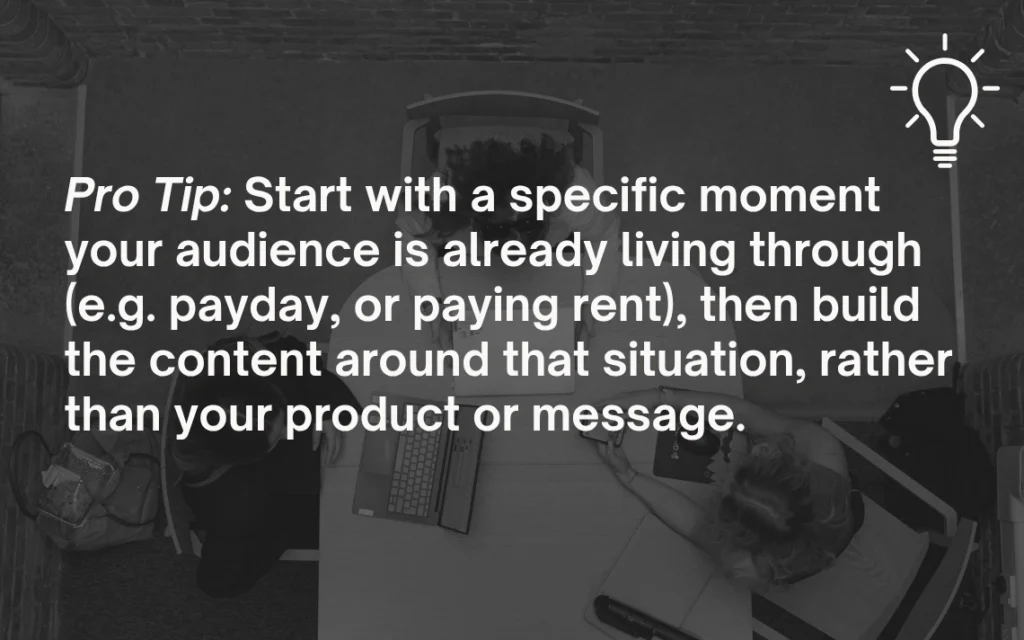
Shared, lived moments are what drive TikTok. The financial industry actually has a lot of these moments, but many brands ignore these in favour of generic advice or product pushes.
Instead of starting a concept with “What do we want to say?”, challenger banks should be basing their content around “What is our audience experiencing right now?”. Content around payday, bills, the end of the month or saving for big events are perfect examples. They speak directly to the bank’s audience by sharing these lived moments with them.
These moments encourage conversation and engagement with content because they evoke emotion. Dry financial advice doesn’t create an emotional reaction; and thus doesn’t resonate with users. Audiences want real experiences that they can relate to and see themselves in. Financial content is naturally an emotional topic, but often brands forget and/or ignore this. When audiences actually feel something from the content, brands reap the rewards in terms of content engagement.
Videos Should be Created Specifically for TikTok
There’s a difference between content that fits the platform and content that interrupts it. Most challenger banks still create content that belongs on a website or paid ad, resulting in underperformance on TikTok.
One of the biggest mistakes challenger banks make on TikTok is faceless content. Humans are genetically built to respond and pay attention to other humans. UGC-style videos build trust faster than polished brand assets, making TikTok the perfect platform to showcase this side. Utilising face-to-camera videos with catchy hooks and casual, reactive filming makes the content fit seamlessly into the feed and drive higher view retention. In fact, TikTok actually rewards the more imperfect style content as it creates a feeling of authenticity.
To dive deeper into this essential part of the TikTok process, check out our article on creating human-first content for digital banks.
Consider Different Accounts for Different Audiences
Although this approach might initially feel like more work, targeting everyone from one account can mean that gets lost.
Multiple accounts allow banks to centre content around life stages, financial situations and personal struggles, rather than features and products. Different audiences have completely different mindsets, and what they value varies. Brands that cater to all audience groups on one page end up with generic messaging that resonates with no one.
The advantages of taking a multi-account approach for challenger banks are:
- Algorithm niche signals stay clear and consistent on each account, meaning better targeting.
- Account issues risk is distributed across multiple accounts, meaning a brand’s presence is more secure.
- Compliance requirements vary depending on location, so having multiple accounts allows brands to serve specific compliance requirements, eg, UK FCA vs US FINRA vs AU ASIC.
Build a Content Machine
Often, the biggest excuse challenger banks have for a lack of TikTok-optimised content is the difficulty of sustaining the volume of content the platform demands at such a rapid pace. Creating a system for all content, rather than individually reviewing each video, is the key to overcoming this.
Challenger banks with the most successful TikTok strategies set clear boundaries upfront, stating what can and can’t be said. Defining how to reference products, the use of disclaimers, and what’s off-limits will prevent the back-and-forth that slows posting consistency.
Pre-approved content formats are a huge time-saver when it comes to creating content at speed.. With a pre-approved structure, teams can plug in ideas without going through the whole approval process from scratch. Successful structures will include how to incorporate key disclosures into video overlays, how to use verbal disclaimers within content, and ensuring comprehensive disclosures in video descriptions. This means the bottleneck created by too many levels of approval can be avoided.
What This Looks Like
So, we’ve discussed what challenger banks SHOULD be doing on TikTok, but who are the brands that have been nailing it? The gap between what fails and what works becomes obvious when you compare them to brands like Monzo and Starling Bank. Both of these brands lean into content that feels human and built for the platform, but in slightly different ways.
Monzo
Monzo’s TikTok content is built around relatable financial moments rather than product features. They partner with creators to produce humorous, relatable scenarios that appeal to their target audience group. They cover themes like Me to My January Pay Check,and tips to start saving and investing money.
Utilising humour and skit-style content makes their posts feel native to the platform and less like a brand trying to promote itself. Their approach focused on engagement rather than selling. The product is rarely the centre of the video, making it feel authentic.
As a result of their TikTok strategy, Monzo saw ~40% increase in app downloads from Gen Z users and has generated millions of views through their TikTok collaborations and influencer-led storytelling. This is clear proof that the way to crack TikTok is to switch from message-based content to moment-based content.
Starling Bank
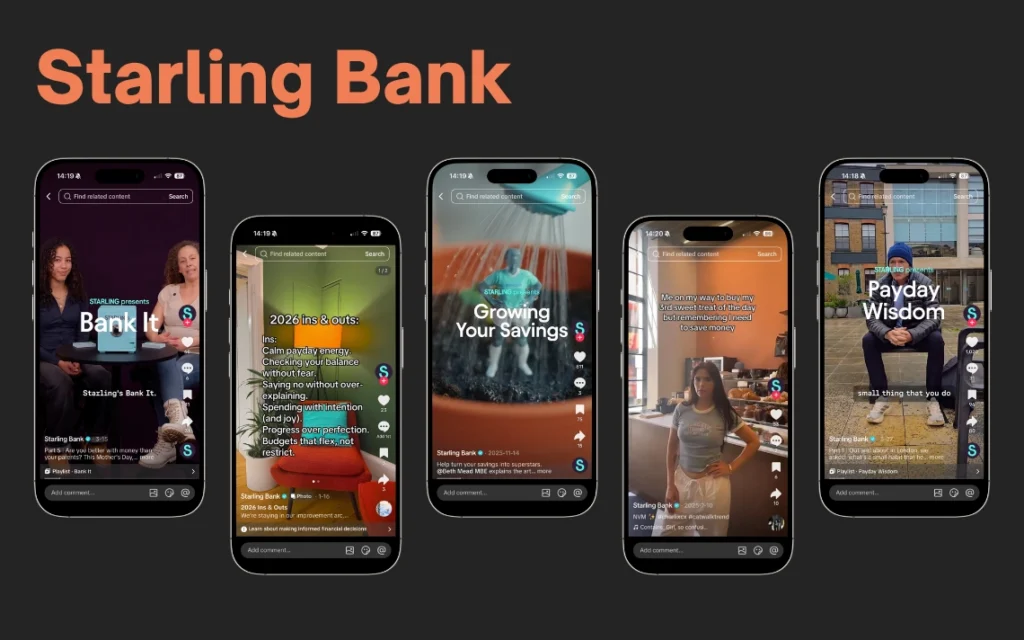
In contrast to Monzo, Starling takes a more direct, educational approach; a lot of their content leans more into short, clear financial explainers, covering topics like budgeting, saving habits, and common financial mistakes.
This is balanced with trend-based videos that speak to a specific audience. For example, when the full refund hits and payday workout routine videos are aimed at niche subsections of their audience, making the content feel more relatable to these groups.
What makes this approach effective is its alignment with intent. It builds trust and delivers value, executed in a platform-friendly manner. TikTok is Starling Bank’s highest performing platform in terms of engagement, with 4.27M impressions and 1.94M engagements.
While both Monzo and Starling Bank’s approaches differ, both brands succeed for the same reason: they prioritise content that feels native, relevant, and human, rather than trying to force traditional marketing into the platform.
Conclusion
Most challenger banks are still treating TikTok like other traditional marketing channels. As a result, they are prioritising their own messaging over how their audience behaves on the platform.
The best-performing brands on TikTok deliver content that aligns with how the platform is used. They focus on utilising moments their audience can relate to, evoking an emotional response and delivering value in a way that prioritises engagement over promotion.
On TikTok, challenger banking brands don’t flop because they lack strategy; it’s because their strategy is outdated. Before you start building your own strategies on TikTok, take some time to dive into the TikTok algorithm, seeing how it works, and how else you can be making the most of it.