


Instagram Revival: How Investment Brands Can Win Over the Next Generation of Investors

The common misconception held by many investment brands is that the next generation isn’t interested in investing. This is completely false – they’re just not looking for the information in the places the brands would expect.
70% of Gen Z investors use social media as a source of information for their financial decisions. Brand websites and traditional media are often too complex and alienate many people who want to start their investment journey. Instead, many young people are consuming content from “Finfluencers” and brands on social media.
Where many investment brands are falling behind is in their struggle to produce content that competes with these ‘Finfluencers,’ and it’s a pattern that shows up across finance marketing generally, not just on Instagram. They struggle to break out of the stuffy, jargon-heavy identity that they use elsewhere. Consequently, the content lacks impact and engagement, leading many brands to believe that Gen Z are not interested in investing.
How Gen Z Is Learning About Money
Financial education followed a predictable path for decades – people learned about investing through banks, financial advisors, or traditional media. And it was usually people later in life who decided to invest, often when they felt they had enough money saved to do so.
But today, information about investing is easier to access, and consequently, it’s catching the eye of younger generations. Social media platforms, like Instagram, have become an entry point to the investing world, with 40% of Gen Z using TikTok/Instagram for research instead of Google.
Community Discussion
Social media is a community-based space, so, naturally, the people who are consuming financial information on Instagram are also discussing it with others.
Gen Z want to validate information through discussing shared experiences and social proof with others. Evidence of this can be seen in the comment sections and community groups. It creates a more collaborative learning environment and helps to build trust in creators and brands who are delivering accurate and useful information.

Passive Learning
Gen Z are being served content about finance and investing without even looking for it because of how the algorithm behaves. If brands and finfluencers can tap into trends and content that’s likely to be shared widely, they will be able to reach audiences that perhaps weren’t even aware that these products and services exist.
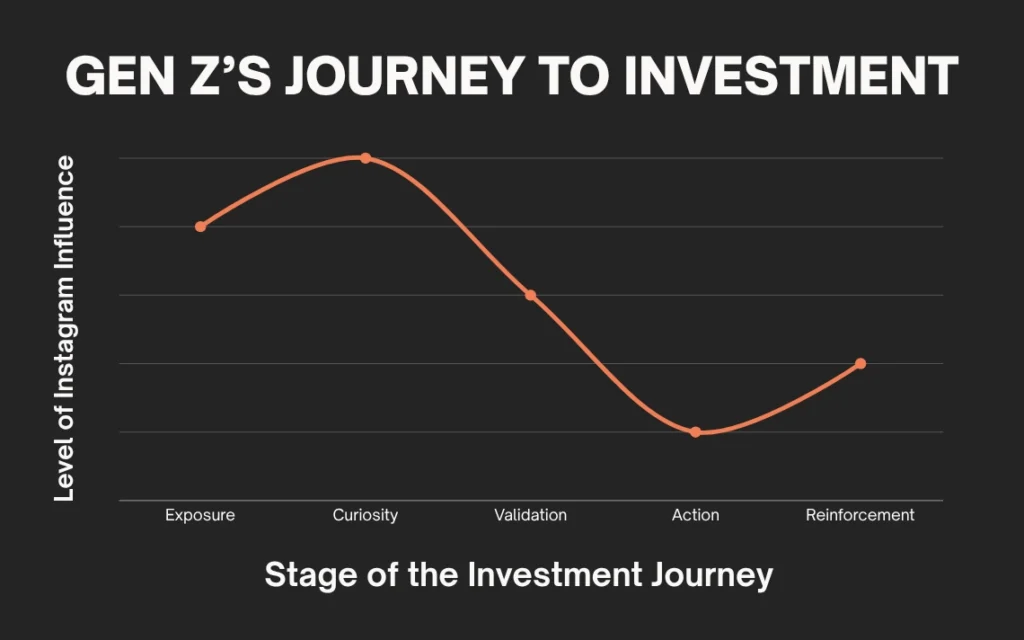
Because of this more passive form of learning, the way Gen Z take action with this information is different to other generations. Previously, people would:
- Look for the information
- Consume the information
- Take action
But now, partly because of the age people are getting the information, and partly because of how they are consuming the information, Gen Z are:
- Being served content without searching
- Learning
- Actively searching for more information
- Validating information amongst peers
- Eventually taking action
This reinforces the need for an ongoing presence on social media. It’s no longer sufficient to do one campaign and expect to be discovered.
Finfluencer’s Influence

A finfluencer is a social media creator whose content shares and promotes financial products, particularly investment and credit lending products, on social media.
Gen Z place more trust in these creator profiles over institutions because of the relatability. Finfluencers create content using simple language and explanations, making the subject feel accessible. The finfluencer’s audience can relate to the situation being discussed, or the way the topic is explained, and therefore trust is established. Instead of having to read through lengthy reports or formal advice that can feel like lecturing, Gen Z are getting their information in the form of quick explainers, lived experiences, and communication that feels like a conversation.
The Problem: Why Investment Brands Are Losing on Instagram
Misunderstanding how the next generation wants to consume information is the main reason investment brands fail on Instagram. These brands often use outdated posting styles and messaging that don’t resonate with the audience.
They also misunderstand who it is they are actually competing against. Often, it’s not other investment brands, it’s the finfluencers who are gaining the audience’s trust by speaking to them on a level that they can relate to.
They Sound Like Institutions, Not People
Language is a huge part of what makes a brand feel accessible and trustworthy – but so many investment brands get this wrong!
Instagram is not the place for complex finance jargon or overly formal language. It’s a relatively informal platform with many people just starting to dip their toes into the finance world. Brands make the mistake of thinking that to have a consistent brand voice, they must speak in the same language on Instagram as in their in-depth reports.
Formal and complex language alienates younger generations from engaging with an investment brand’s content. It makes their products feel complex and fails to build trust, ultimately alienating this audience group entirely.
They Prioritise Products Over Education
Instagram users are getting good at spotting when they are being sold to. Overly pushy messaging about products rarely succeeds and creates a lack of authenticity.
Too many investment brands focus on pushing their funds and services, rather than creating content that the next generation wants to see. Gen Z are looking for informative, fast-paced and relatable content from brands.
If finfluencers can do it, so can investment brands.
They Misunderstand the Platform Culture
Instagram has clear guidance on what makes content successful on its platform. But many investment brands are following the rules.
Brands opt for static posts and carousels over short-form video and then wonder why their reach is limited. Short-form video allows content to feel more relatable, and information can be conveyed quickly and simply. The volume of information in static posts tends to be overwhelming and littered with jargon that not everyone can understand.
They also get the tone of their posts wrong. They use Instagram as a place to broadcast their information, rather than start a conversation. Instagram is a social platform and is designed to be a space to spark discussion and build communities. If they can switch the messaging to be more conversational, not only will the algorithm reward this, but it will establish trust amongst the community.
The Opportunity: Why Instagram Still Matters
For the next generation of investors, Instagram plays a specific role in the investment journey. Although it might not be the space where the final decisions are made, it’s where the foundation of trust, understanding and interest is built.
Brands are being discovered by people who aren’t specifically searching for what they’re offering because they are being served it by their algorithm. Product pushes don’t work because the audience isn’t yet invested in the brand, and trust hasn’t been established.
Traditional sources of information on financial topics, like reports and websites, require intent from the audience. Instagram allows brands to gain exposure with an audience passively, before the intent is even realised. This generation isn’t searching for “how to invest”, but instead stumbles across content on social media that they can relate to. If a brand can build content around relatability, it can build awareness and confidence in a completely new audience group.
How Investment Brands Can Actually Win
With the correct strategy, investment brands will tap into a whole new audience market of Gen Zs on Instagram. Few brands are doing this effectively at the moment. If they can nail this down now, they’re going to be cornering a new source of potential investors.
Below are some simple approaches investment brands should be tying into their strategies to achieve better results.
Education-First Content Wins Attention
Education is the entry point of any investment journey, so perfecting this content pillar is very important.
Gen Z learn best through simple explainers and “how it works” style content, rather than really in-depth, jargon-heavy material. Often, financial products are too heavy to simply sell straight up. An audience needs a base level of understanding of the topic first.
The brands that create the most successful educational content not only teach, but also are remembered. Investment brands want to be the first brand that comes to mind when the audience transitions from the education stage of the journey to action. Creating educational content that consistently adds value and teaches the audience relevant topics will do this.
One brand making a positive transition into educational content at the moment is Freetrade. They are a UK-based commission-free investment platform. Their content centres around education on multiple financial topics. The content styles vary to suit people in various stages of their investment journey.
They create short, interview-style videos that are short and engaging as well as educational for people just starting their discovery. For Gen Zs who are a little further into their education, they’ve created a series called “weekend read”. They introduce more complex finance topics, and it’s linked to longer pieces of text that can be discovered via their website.
Freetrade’s content is branded, making it instantly recognisable, as well as offering the Instagram community content they can learn from, without directly pushing the product they sell.
Consistency Builds Familiarity
The goal for an investment brand’s Instagram presence shouldn’t be to go viral. They should aim to show up consistently. Instagram is a platform driven by frequency. The more a brand posts, the more visibility they get for their content and messaging.
Audiences on Instagram are looking for trust and authenticity from brands, and trust can only be developed over time. Most users won’t take action, or even engage, the first time they see a brand’s content. The brand needs to establish trust over time through repeated exposure.
Revolut is a great example of a finance brand that understands the importance of consistency. Not only do they make regular posts, but the content also covers several everyday financial interactions, from spending to saving to investing.
Repeated exposure builds familiarity before users ever reach an active investment decision, mirroring the role platforms like Instagram play in shaping early-stage financial awareness and establishing trust.
Human Tone Makes Finance More Accessible
Content tone is what makes people stay and engage. Finance is naturally a very intimidating and jargon-heavy topic. But by using a more human tone in content messaging, brands can make the industry feel more accessible.
Conversational language resonates with an audience of younger people because it feels relatable. They don’t want to engage with “financial services”, they engage with topics like “life goals”, “personal progress” and “money struggles”.
A human tone helps to lower the accessibility barrier for these generations, and makes the content feel more relevant to them. Tone across social media channels doesn’t need to be the same as in brand reports. The audiences are completely different, therefore so are their needs, and the tone of the messaging should reflect that.
Moneybox creates clear examples of Instagram content using a human tone. Their content focuses on topics of genuine interest to their audience, such as financial confidence and money wins around Christmas. Video content is a key part of their strategy, utilising UGC style video, as well as more professionally shot, expert-led content.
All of this comes together to give a real human feel to the brand and make it feel accessible, particularly to younger generations.
Further reading: What is Human First Marketing?
Take Cues from Finfluencers
Many brands ignore these financial creators because they don’t have the same end goal of selling a service or product. But what they do have in common is a shared audience. This is exactly the territory a good influencer marketing agency operates in, finding creators whose audience overlaps with yours even when their content style looks nothing like traditional financial marketing. The audience the finfluencers have built is exactly the one investment brands want to be targeting.
Finfluencers use storytelling and personality to simplify topics in a way that investment brands are failing to. Their content feels native to the platform and not like marketing, which is how they’re able to establish audience trust. UGC drives ~28% higher engagement than traditional brand content.
If investment brands are able to adapt these approaches and styles to their own content, they will outperform their competitors who are stuck creating content that doesn’t fit the needs of the audience.
Conclusion
The assumption that the next generations aren’t interested in investing is completely wrong. What many brands are failing to understand is that the discovery has shifted away from traditional channels and over to social media.
Investment brands that adapt to how Gen Z consume content and information will unlock a new level of visibility. Decision making is now a multi-step process, from initial passive discovery, to education, social validation and then eventual action.
Investment brands that win on Instagram are not the ones that are pushing product or broadcasting information. They are the ones who earn visibility early, because attention is now the foundation of trust. If you want help building that kind of presence, we’re a social media agency that works with investment and finance brands on exactly this, get in touch to find out more.