

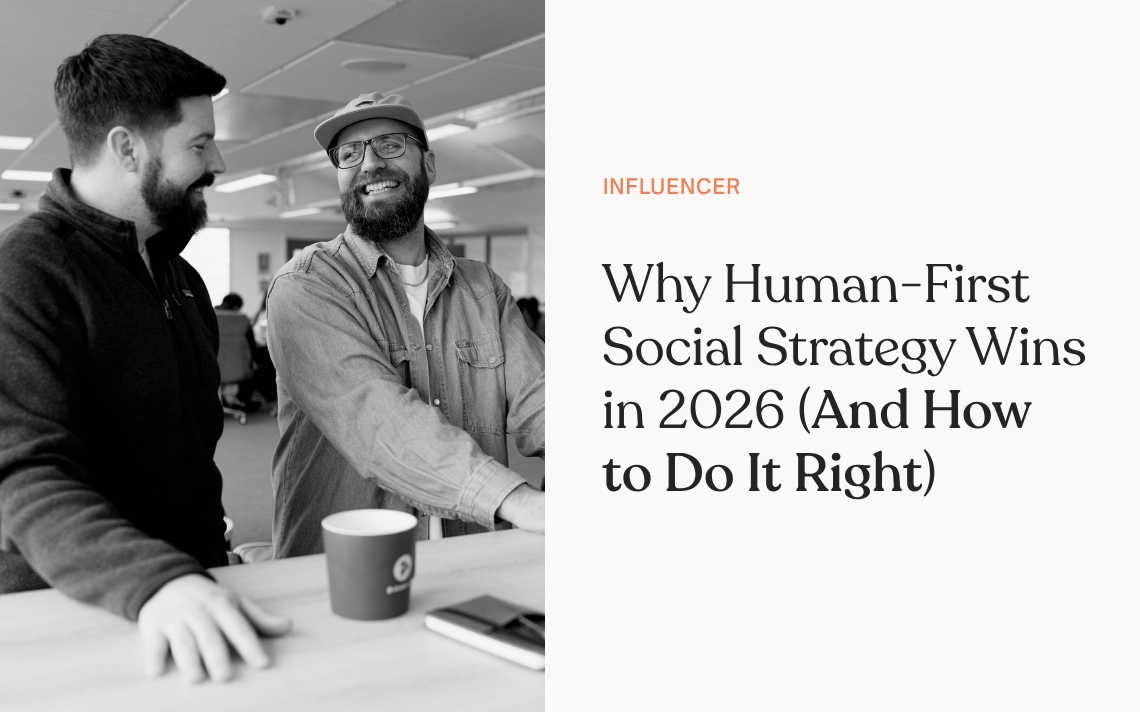
Why Human-First Social Strategy Wins in 2026 (And How to Do It Right)

Social media is no longer about who can post the most content or chase the latest trend the fastest. In 2026, audiences expect more from brands than ever before. They expect them to be relevant, authentic, and connected. This is why Human-First Social Strategy continues to outperform other strategies.
In this article, we’ll dive into why Human-First Social Strategy is so effective in 2026 and how you can apply it to your work effectively.
What Is a Human-First Social Strategy?
Before moving on to the effectiveness of this strategy, let’s first try to understand what Human-First Social Strategy really means.
Human-First Social Strategy is a strategy that focuses on the audience in every social strategy that is being implemented. It is a strategy that focuses on the needs of the people and how they are going to feel about the brand.
The key elements of a Human-First Social Strategy are:
- Audience needs instead of platform trends
- Conversations instead of one-way promotion
- Value and understanding instead of the quantity of the content
- Long-term trust instead of quick wins
Human-First Social Strategy is not a strategy that focuses on the absence of structure and metrics. It is a strategy that focuses on the fact that people are more likely to engage with the content that is being created, as the social platforms will reward this strategy.
Why Human-First Social Strategy Outperforms in 2026
Audience behaviour, as well as platform algorithms, have evolved in ways that demonstrate a clear preference for a Human-First Social Strategy approach.
Audiences Are More Selective
The fact that users are consuming high volumes of content every day means that content that is too generic or too sales-focused is immediately dismissed. No amount of branding sophistication is going to change this.
Human-First content stands out because it is seen as relevant to the audience’s lives. When content sounds like it was written by a person rather than a marketing campaign, audiences are much more likely to engage with it, remember it, and associate it with the brand that produced it.
Platforms Reward Meaningful Engagement
Platforms have evolved to reward content that demonstrates clear signs of interest, such as comments, saves, shares, and overall engagement time with a post.
Human-First Social Strategy performs well in this regard because, by definition, it is designed to start conversations, not just elicit fleeting reactions. This, over time, results in good organic reach and visibility without requiring constant content creation or paid support.
Trust Is a Competitive Advantage
Trust has become a key factor in how audiences choose which brands to follow and buy from, particularly in crowded markets. People are cautious and look for signs of credibility.
Human-first social content builds trust by showing personality, sharing useful insight, and avoiding heavy promotion. That trust grows over time and supports stronger engagement, loyalty, and long-term performance.

Core Principles of an Effective Human-First Social Strategy
To be successful, Human-First Social Strategy is based on a set of principles that serve as a guideline to create content and engage with the audience.
Audience-Led Planning
While other social strategies may focus on what is currently trending on social media, Human-First Social Strategy focuses on the audience.
This means:
- Identifying the audience’s problems and questions
- Identifying how the audience consumes social media content
- Creating social media posts that address these problems and questions
While social media platforms will continue to evolve, the audience will remain consistent. It is easier to focus on the audience rather than social media.
Consistency Over Volume
While posting a lot on social media may not necessarily guarantee better results, Human-First Social Strategy focuses on consistency.
A Human-First Social Strategy may find that posting a small volume of content may have better results compared to posting a lot. Consistency will encourage people to continue interacting with the brand on social media.
Personality Over Perfection
While people may have previously looked forward to seeing perfect brand messaging on social media, they now want to see the brand’s personality.
A Human-First Social Strategy gives brands the opportunity to:
- Be casual with their language
- Be honest with their audience
- Provide insight into their business
How to Build a Human-First Social Strategy That Works
Knowing what a human-first social strategy is doesn’t mean much if you don’t know how to use it. The real challenge is turning the idea into something that feels natural, genuine, and worth paying attention to.
Start With Audience Insight
It all starts with your audience. And not in a “what age are they and where do they live?” way. To show up in a way that feels human, you need to understand what’s actually going on in their world. What problems keep coming up? What questions do they ask over and over again? What kind of content makes them stop scrolling and lean in? When you get this right, your content starts to feel relevant instead of forced.
Create Content That Delivers Value
Once you understand who you’re talking to, the focus shifts to value. Human-first content isn’t about pushing a message or selling something straight away, it’s about being useful. Ask yourself whether your content is genuinely helping someone, answering a real question, or offering a new perspective. Educational posts, simple tips, and honest insights tend to work well because they give something back immediately, without asking for anything in return.
Encourage Genuine Interaction
And finally, remember that social media is a conversation, not a megaphone. Being human-first means showing up and actually engaging. Ask questions. Reply when people comment or DM you. Join conversations that are already happening instead of just talking about yourself. When brands do this well, they stop feeling like brands and start feeling like people, and that’s when real connections are built.

Measuring Success
Human-First Social Strategy demands a shift in the way success is measured.
Focus on Quality Engagement
While follower growth and impressions are still important, they should not be the focus.
More important metrics should be:
• Comment quality and relevance
• Saves and shares
• Repeat engagement from the same users
These are better measures of whether the content is resonating with humans.
Track Long-Term Impact
Human-first strategies are built for long-term sustainability.
This means that brands should be able to see:
• Increased brand awareness
• Increased trust and credibility
• Stronger campaign performance
By aligning social reporting with business goals, long-term value can be made clear.
Common Mistakes to Avoid
While the Human-First Social Strategy is very powerful, there are some common mistakes that could hinder the strategy.
One of the common mistakes is being relatable but not being helpful. Personality is important but is always accompanied by value and insight.
Another mistake is over-automating the engagement process. While scheduling tools are important, the response and the conversation need to feel personal.
Lastly, being human-first does not mean being unstructured. Goals, content pillars, and the message are important in ensuring the strategy remains effective.
Conclusion
In 2026, the social media brands that will perform best will be those that understand people, not platforms.
Human-First Social Strategy helps build trust, relevance, and long-term engagement by prioritising real connection over quick wins. This is because it matches how people behave and how platforms reward content today.
By focusing on people, creating content that matters to them, and encouraging meaningful interaction with it, brands can build a social presence that will last.
Want to break free from transactional social media and create a truly powerful Human-First Social Strategy?
Now is the time to start.
Want to talk to us about how a human-first social strategy can work for your brand?

