

When we picture a luxury hotel, we all imagine flawless imagery, gleaming marble, infinity pools and immaculate suites. The problem with perfection is that this can risk feeling sterile online. In a digital landscape driven by emotion and connection, audiences crave stories that feel real, not just refined.
The challenge isn’t to abandon cinematic visuals, but to layer them with authentic human presence that gives the brand soul.
The Power of Human-Centred Luxury
There has been a shift in audience expectations, today’s affluent travellers value experience, empathy, and cultural connection as much as opulence.
Real people and moments create trust and relatability, key emotional triggers for booking decisions.
Some great examples of luxury brands that already do this and integrate human stories into their feeds are Aman, Rosewood and Belmond.
Balancing Cinematic Aesthetics with Humanity
Luxury content must remain aspirational, otherwise everyone would be able to achieve it. But it doesn’t need to be whitewashed and use models in the content, aspiration can include emotion.
Combine “visual poetry” (cinematic imagery) with “emotional truth” in other terms, human stories. Use the balance rule, think about it from the perspective of someone who may only use the hotel once in their lifetime, due to financial restraints or otherwise.
Create a story that has an arc, think about each stage of the stay, how will their arrival look, what does the service offer, how can you create that human emotion between the hotel staff & the customer and what do you want them to feel when they leave? Aim to be as real as possible, rather than static perfection shots.
Storytelling Formats that Humanise Ultra-Luxury Content
Here we’re analyse some different angles that could be used in order to really level up your content.
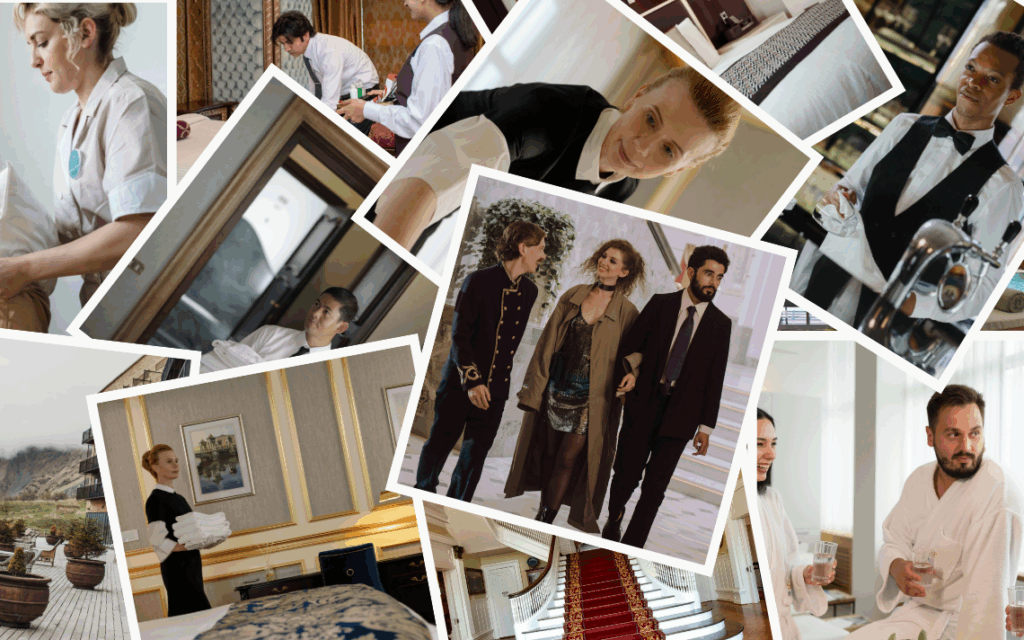
Staff as Storytellers
Get your team involved as much as possible in your content. Think about micro moments where concierges, chefs, butlers and spa therapists can be shown excelling at what they do best. Envisage this as “A Day in the Life” piece, using reels or short staff interview clips. Hiring a luxury hotel photographer to capture your team in their natural habitat is a worthwhile investment.
Behind-the-Scenes Rituals
When you stay at any hotel, you don’t always think about the prep that gone in to making someone’s stay truly special. But why not showcase that?
The precision care, and emotion behind each experience, from setting the perfect breakfast to floral arrangements. Use soft cinematography and natural sound for intimacy.
Guest Moments (with Discretion)
It’s people that make your business, but it wouldn’t exist without your customers. With permission (and done right) you should include your guests where possible in your content.
Capture glimpses of genuine emotion, for example: arrival smiles, cultural experiences, handwritten notes but always respect their privacy.
If your guests are loyal or ambassadors for your business, consider asking them to create User-Generated Content that you can repurpose.
Cultural and Local Connection
Think beyond the hotel walls, are there any local businesses that align with your values or portray a premium-luxury lifestyle.
Consider local artisans, local partnerships, and heritage experiences that will add merit to your guests’ stay.
If there any connections to items in the hotel, highlight this in your content, for example: The story of the local potter who crafted the hotel’s tea set.
Emotional Framing: Crafting Warmth in Ultra-Luxury
Just because your portraying an ultra-luxury brand, doesn’t mean your tone has to be formal. People relate to things they understand, so the last thing you want to do it alienate them from your brand.
When creating content, use slower pacing, ambient sound, and natural light to evoke calm and sincerity. Rather than using big, bold captions, replace with the narrative tone, “Meet the hands behind your morning coffee.”
Your copy should still evoke luxury but also have a human warmth. Even down to the hashtags, some examples include: #BeyondLuxury #HumanHospitality. Also keep them a minimum, as this can looked clutter and unprofessional, keep it to no more than three.
Measuring the Impact of Human Storytelling
There are several things to consider when looking at the metrics and how they impact your results. Rather than focus on the reach, as this won’t provide a clear picture of the people that interact your brand, you need go that one step further.
Instead, look at engagement rate, watch time, shares, comment sentiment, and saves. Analyse these metrics will help to get a better understanding of who is really engaging with your content.
Within your paid social media, look at brand lift campaigns to help keep your brand at the front of potential customer’s mind when they’re researching their next stay. Authentic storytelling drives long-term brand affinity, not just visibility.
Overall, you should start to notice stronger community engagement after spotlighting real people and moments.
Conclusion: Redefining Luxury Through Humanity
For decades, ultra-luxury hospitality has been defined by precision, aesthetics, and exclusivity. But as guest expectations evolve, so too much the stories hotels tell about themselves. True luxury today lies not in how flawless a property appears, but in how deeply it connects, through empathy, emotion, and genuine human presence.
When brands dare to move beyond polished facades and reveal the quiet artistry of their people, the small rituals of care, and the emotions that shape each stay, they invite audiences to feel something real. That feeling, warmth, belonging, recognition, is what transforms admiration into affinity.
It’s time for hoteliers to look beyond architecture and amenities and focus on the heart of their story: the people who bring it all to life. Because in the end, the most compelling kind of luxury isn’t just seen, it’s felt, hotels have an opportunity: to create digital narratives that are cinematic in style but soulful in substance. Hospitality in motion.
Looking to elevate your hotel brand image? See how we can help today.