
Skip links
attention interest desire action

AIDA Model Explained: Attention, Interest, Desire, Action (With Examples)

As the noise on social media becomes louder, it has become evidently harder for brands to stand out and make their voices heard. The easiest way to be heard? Talking directly to the human behind the phone screen. Ensuring to prioritise creating meaningful interactions through strategic creative content. While creativity might be the Queen of social media, strategy remains King, which is why we’re revisiting the classic AIDA model (Attention, Interest, Desire & Action) to help you craft strategies that not only captivate but convert your audience into brand loyalists.
What Is The AIDA Model?

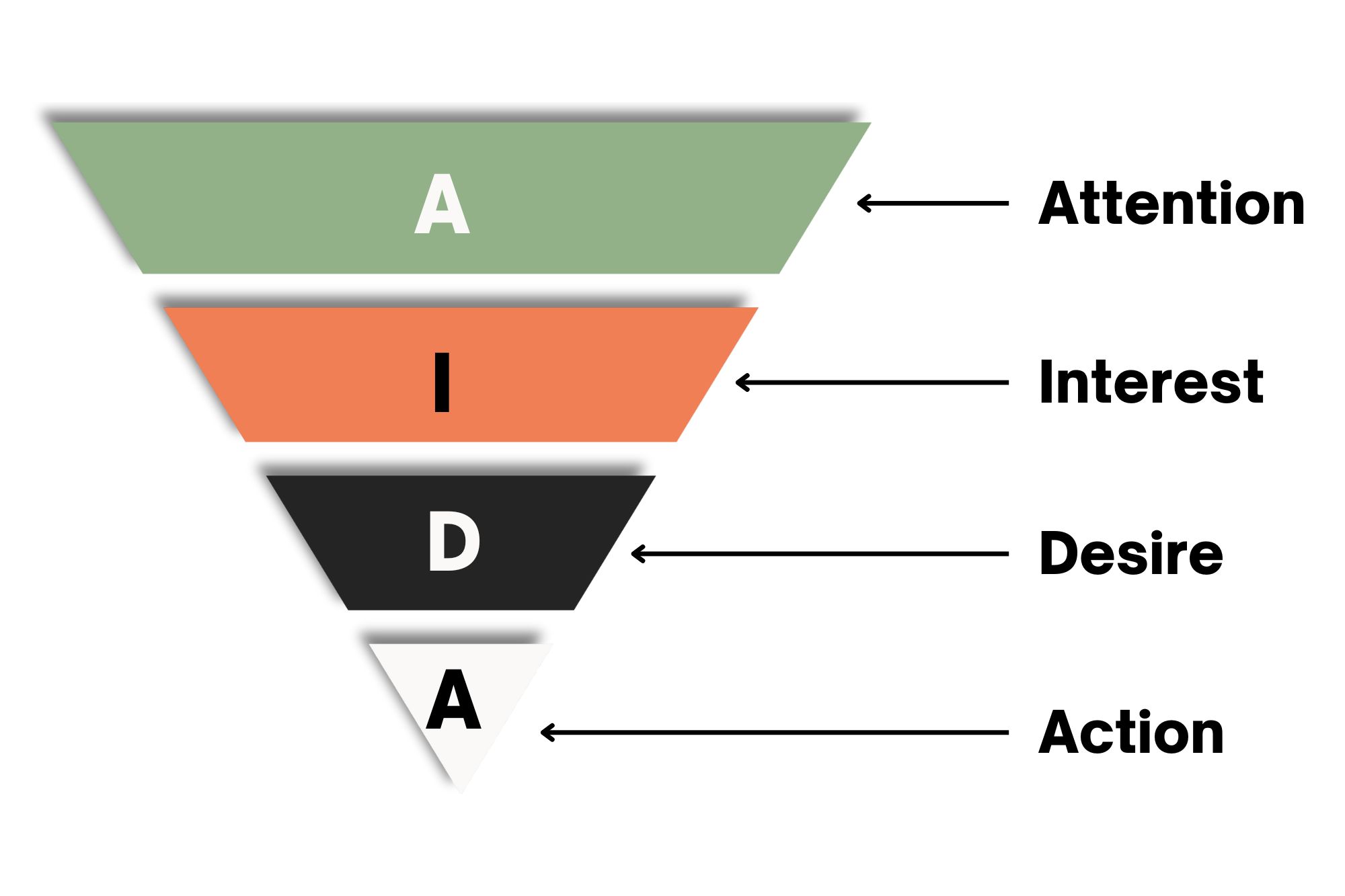
The AIDA model stands for attention interest desire action. The AIDA model is a marketing framework that describes the four stages a customer goes
through before buying: Attention, Interest, Desire, and Action. It was created by advertising
pioneer Elias St. Elmo Lewis in 1898 and is still widely used today to plan adverts, campaigns
and social media content that turn strangers into customers.

Attention: Grabbing Your Audience’s Focus

When we look at the AIDA model, the first step is grabbing the attention of the audience. While this used to be simple, in today’s digital world this now requires being heard above all the background noise and chatter. All in an effort to deliver content that not only reaches your audience, but that also resonates with your audience. Recent evidence highlights that the average human attention span is now just eight seconds – less than that of a goldfish! Placing even more emphasis on the importance of visually appealing, impactful content that speaks directly to the wants and needs of the audience.

When done correctly, visual storytelling can be extraordinarily powerful and can be used to provoke certain emotions within the audience. For example, combining real-life stories with unique graphics and eye-catching headlines can make your brand stand out amongst the crowd. At Giraffe, we believe in going a step further – integrating data-driven insights with creative execution to ensure that the content is not only seen but sticks in the memories of the audience.

On social media, the first three seconds of a video or the opening line of a caption is where you win or lose attention. Use a strong hook, bold visual, or thought-provoking question to stop users from scrolling and encourage them to engage with your content.

Interest: Keeping Them Engaged

Ok, so now you have their attention, but how do you build their interest? You do it through content that provides the audience value and starts to establish a mutual relationship. One form of content that is particularly effective at this stage is educational content. By consistently producing high-quality, relevant, and valuable content you can begin to establish your brand as a thought leader within its industry. Being seen as an industry thought leader helps to further build trust with your audience, a crucial part of forming long-term relationships and customer loyalty.

To determine the ideal content for your brand, begin by undertaking some research into understanding the target audience’s interests, challenges, and aspirations – treating them as human beings as opposed to a sale opportunity. By utilising a human-first approach the brand utilises content that is not just visually appealing, but also emotionally triggering. A brand’s end goal is to create a space where your audience can not only find the products or services they require but also solutions and inspirations that resonate with their own hedonistic values.

Use interactive content such as polls, Q&A sessions, quizzes, and carousel posts to encourage participation. The more your audience engages with your content, the more likely they are to develop a genuine interest in your brand.
Desire: Making Them Want It

Desire is the emotional connection brands need the audience to feel, but we can’t do that simply by showcasing a product’s features. Instead, we have to go beyond the surface, highlighting the emotional benefits and the value it adds to their everyday life. These ‘emotional motivators’ are what drive consumer purchasing behaviour. Important motivators include desires to; “stand out from the crowd,” “have confidence in the future,” and “enjoy the sense of well-being” all of which can be answered through a human-first social media strategy.

Through the use of visual storytelling, brands can speak directly to the audiences’ desires, while still encompassing their core values. As a result, the audience can imagine their life enhanced by the brand, as opposed to just purchasing a product. This is a crucial step in the marketing funnel as it transitions interest into something deeper – a genuine connection.

Showcase customer success stories, testimonials, user-generated content, and influencer partnerships to help your audience visualise the benefits of your product or service. People are more likely to desire something when they can see others enjoying and benefiting from it.

Action: Getting Them To Act

The final step of the AIDA marketing model is Action. Action is often considered one of the most crucial stages as it converts interest and desire into tangible and measurable outcomes. But how do we get the audience to take action?

Through the strategically crafted strategy from the earlier stages of the AIDA model marketing framework, combined with effective calls-to-action (CTAs). However, CTAs are not just about telling the audience what to do, they should empower and inspire the audience to be willing to take the next step.

Utilising verbs within CTAs tends to be more compelling and energising to the audience and works as a trigger point. Opting to use words like ‘Discover,’ ‘Explore,’ and ‘Begin’ not only prompts an action but also evokes a sense of adventure and possibility. Actions can include asking them to subscribe to your newsletter, downloading a resource, making a purchase or even something as simple as following or interacting with your brand.

Every piece of content should have a clear purpose and a clear next step. Whether you want users to visit your website, sign up for a newsletter, or make a purchase, use a concise and compelling CTA that makes the desired action obvious and easy to complete. To get users to purchase using retargeting through paid advertising to capture audiences who have shown interest.

AIDA Model Example – The Rhode Phone Case

Let’s explore one AIDA model example. In March 2024, Hailey Bieber shook the internet when she introduced the brand-new Rhode phone case. But what made this seemingly basic phone case campaign go viral online? Her team utilised AIDA!

The day prior to announcing the launch, Hailey was seen using the product in a reel posted to the Rhode Instagram account, in which the unannounced product began to get attention. This attention was then able to turn into interest due to the practicality of the product. One problem lip gloss wearers often encounter is the inability to find the product in their handbag, but Hailey created a product that could resolve the issue.

On the day of the launch, Hailey dropped another not-so-sneaky peek at the product. However, this time she opted for a relatable selfie while rocking a fur coat and sunglasses. This helped to build even more interest in the product…but also subconsciously led the audience to think they could look like Hailey with the product. Thus creating a sense of desire.

So when it came to launching, that same afternoon, her audience was ready to take action and, unsurprisingly, the phone case sold out almost instantly! There are many AIDA model examples that clearly show us how brands guide users through the customer journey from capturing attention to building desire and then encouraging action.

How To Use The AIDA Model In Social Media Marketing

By using this alternative approach to incorporating the AIDA model marketing framework into your brand’s social media strategy will not only level up your social media efforts but it will also help your efforts align cohesively with the needs and wants of your target audience. All helping to make your brand, the talk of the town on social media, for all the right reasons!

At Giraffe our human-first approach to social media means we are already helping brands craft social media campaigns that resonate with and engage audiences on a deeper level. Get in contact with us today to find out how we can help level up your brand’s social media strategy.