

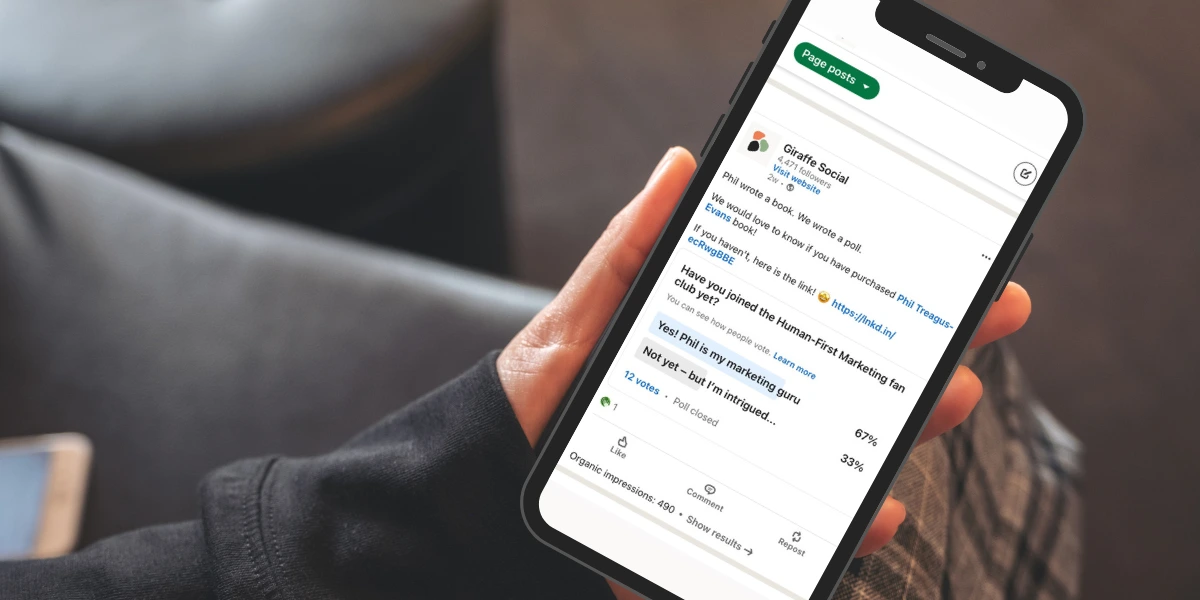
A social media poll is a quick invitation to answer a defined question. It can start a conversation, reveal what followers are curious about or help you choose which explanation to publish next. It is a useful format when the question matters to the audience and you are willing to act on the result.
A poll is not a representative customer survey. AAPOR’s guidance on non-probability online samples explains how self-selection and uneven access can distort conclusions. People who see and choose to vote may be unlike the customers you need to understand, and the answer options shape the result. Use it as a conversation starter or a clue to investigate, not as proof that a product will sell. For a high-stakes decision, combine polls with interviews, customer support evidence and other research.
What makes a good poll?
Ask one clear question, offer distinct options and explain why you are asking. “Which part of onboarding is hardest: getting approval, training the team, moving data or measuring use?” gives a B2B audience a concrete choice. “Would you like our exciting new platform?” is leading and offers little to learn. Avoid options that overlap or push people towards your preferred answer. If useful views are missing, invite people to explain in the comments. Then share what you learned and what you will do next. If an answer is missing, acknowledge it in the follow-up. That second post can contain a practitioner’s explanation, a link to a useful guide or a question for deeper interviews. It often creates more value than the initial vote count.
Where can you run polls?
LinkedIn and X offer native polls; Instagram and other networks may use interactive stickers or different question formats. Controls change, so check the publishing tool in the account you actually use before planning a campaign. Choose the setting where your audience is active and where the question belongs. The sections below explain how the question needs to change with the platform.
Our social media strategy team uses audience questions to decide when a poll is useful and when another format will answer the problem better.
Facebook and Instagram
Interactive features vary by account and placement. An Instagram Story sticker can suit a quick visual choice, while a Facebook Page or Group may be better for a question that needs comments. Check the tools in the account you actually publish from; if a native poll is unavailable, ask a clear question in a normal post.
Choose a topic you can follow up on while the conversation is active. A question about service hours, for instance, might surface useful comments, but it should not replace wider customer and operational research.
X
X polls are text-based and can be useful for a short question among an active conversation community. The platform’s poll guide explains current options, voting and duration. Write the question so it makes sense without an image, and use answer choices that readers can distinguish quickly.
Poll votes are private to other users, but the result is still a self-selected sample of people who encountered the post. Use comments to understand why someone chose an option, and do not infer the views of all customers from a small or unrepresentative response.
A LinkedIn poll can help a professional audience compare approaches or show which question deserves a deeper explanation. LinkedIn’s poll instructions cover member profiles, Pages and groups. Its current poll FAQ says desktop and Android allow up to four options, while iOS may allow five. Check the composer you use and choose a duration that gives the intended audience time to respond.
Ask a question people in the target role can answer from experience. “Which part of implementation takes the most time?” is more useful than “Do you like our new product?” Give enough context in the post, avoid overlapping choices and invite people to explain what the options miss. If the vote suggests a common problem, follow up with a practitioner’s explanation, a resource or a discussion of what your team learned.
The author can see how members voted, according to LinkedIn’s FAQ, so avoid asking people to disclose a sensitive workplace or personal circumstance through their vote. Be careful with conclusions. A poll shown to your existing network is influenced by who follows you and who chooses to vote. It can provide ideas for interviews or content, but it is not a representative market study. Compare the answers with customer conversations and other evidence before changing a service or making a public claim.
TikTok
On TikTok, the best question often starts with a demonstration. Show two ways to use a product, two design choices or two questions the team could answer, then ask viewers which one they want explored next. Use an interactive feature where it is available in the account and format you are publishing; otherwise invite clear answers in the comments and make a follow-up video.
Do not turn a choice between two clips into a claim that one product will outsell another. Watch the quality of questions, whether viewers reached the intended audience and what happened after the follow-up. Our TikTok Shop guide shows how product content has to connect to a reliable retail experience when the goal is sales.
Five useful ways to use a social media poll
1. Learn which question needs an answer
Ask a defined audience which part of a topic they find hardest, then publish a useful explanation of the most common response. For example, an EdTech company could ask teachers whether setup, assessment or reporting needs a clearer demonstration. The result helps choose a content topic; it does not prove what every teacher needs.
2. Make a product choice easier to discuss
Show two genuine options and ask which trade-off matters more. A hotel might compare an early check-in option with a later checkout. A software brand might ask whether clarity of reporting or speed of setup is the bigger obstacle. Use the comments to understand why people chose an answer, then check feasibility and broader customer evidence before changing the offer.
3. Invite experience from a professional community
A LinkedIn poll can ask how peers approach a practical decision. Include a response option for people who do not have enough information, or invite that view in the comments. When the poll ends, share the pattern you observed and a few thoughtful responses, without presenting the result as a formal survey.
4. Build a series around the response
Ask which behind-the-scenes process people would like to understand, then follow through with a short video or article. A poll can become the opening of a useful editorial sequence rather than a one-day attempt to increase engagement. Link the follow-up to a relevant resource or service only where it helps answer the original question.
5. Check understanding after an explanation
After publishing a guide, ask a simple question that reveals which part readers still find confusing. The point is not to catch people out. It is to learn whether the explanation worked and what to improve. In health or finance, do not use a social poll to collect sensitive personal circumstances or make a high-stakes recommendation.
From vote to useful follow-up: a worked example
Imagine a software company asking operations leads which part of a rollout slows them down: getting approval, preparing data, training colleagues or measuring adoption. Before posting, the team decides that the response will choose the topic of its next practical guide, not determine its product roadmap.
The poll closes with 120 votes. Training receives the most, but several comments explain that data preparation creates the real delay. The team publishes a short piece on both steps, asks its customer team whether that pattern matches support conversations, and invites a few users to discuss the process. In its follow-up it says who voted, what the result can and cannot show, and where the deeper answer sits. That is a useful content decision without pretending 120 self-selected votes describe the whole market.
Write and review a better poll
Start with a purpose: “We want to know which issue to explain next” is clearer than “We need engagement.” Write one short question and options that are mutually distinct. Avoid leading language such as “Which brilliant new feature do you love most?” Show the poll to someone outside the team before posting; if they interpret an option differently, revise it.
After publication, record the audience, timing, reach, number of votes and useful comments. Compare response with the usual performance of that account, but do not treat a high vote count as a commercial outcome. Note whether the follow-up drew relevant questions, visits to the answer, or a useful customer conversation. Look for selection bias: existing followers, platform distribution and self-selection influence who answers. A poll with hundreds of votes can still be unrepresentative. Compare it with interviews, support tickets, search queries and sales conversations before making a product or service decision.
Close the loop in public. Thank people, explain what the response suggested and say what you will do next. If the result surprised you, explain the uncertainty rather than claiming a definitive insight. That follow-up shows respect for the people who took part and gives the content a purpose beyond a dashboard metric.
For a broader plan that connects formats to audience needs, see our content marketing matrix guide. Our social media management team can help turn those questions into content and community conversations.
Editor’s note — 18 September 2026: This article was expanded with better question examples, a worked poll-to-content sequence and primary research on self-selected samples. Platform details and duplicate links were reviewed.