


Your ad shows up on someone’s feed and they’ve clicked “hide”. Not because your ad is bad or irrelevant, but because they’ve already seen this ad 6 times this week and they’re bored of it. That’s ad fatigue.
Ad fatigue is one of the most common reasons paid social campaigns fall apart. Most marketers catch it after budget has already been wasted. They try to fix the problem that looks like a targeting issue, a creative issue, or a bad month, and fail because the hidden cause is actually fatigue.
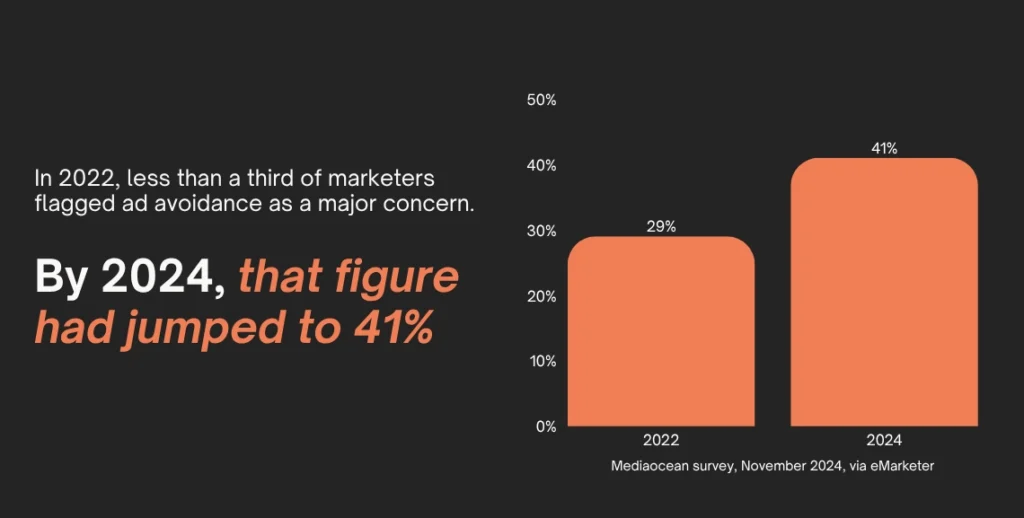
According to the Interactive Advertising Bureau, 36% of US brands and agencies consider managing reach and frequency one of their greatest challenges. It affects every platform, and happens faster than you might expect.
But the good news is that ad fatigue is manageable if you know how. This article covers how to read the warning signs in your data, what’s driving fatigue in the first place, and how to recover performance when it’s already happened.
What Is Ad Fatigue?
Amazon Ads describes ad fatigue as “a digital marketing performance problem that occurs when audiences see the same ad creative too many times, causing engagement to drop and advertising costs to rise.”
When ad fatigue sets in, your ads start getting down-ranked in the algorithm because of the poor engagement signals. Fewer people see the ads, and the ones that do cost you more to reach.
Ad fatigue on social media is a bigger issue than through any other channel. Unlike with paid search, where someone is actively looking for what you’re offering, social media ads interrupt people who are just scrolling their feeds, not consciously looking to engage.
On socials, the tolerance of content repetition is low, shortening the time frame it takes for ads to reach fatigue. Algorithms are designed to show your ad to the users who are most likely to respond. Often, this means the same people are shown your ad over and over until they stop responding to it. According to Epsilon’s research, 88% of consumers say overly repetitive ads make them pay less attention, 84% say it makes them less likely to respond, and 76% say it makes them less favourable toward the brand.
The speed at which ads reach fatigue on each social platform varies slightly. TikTok moves fastest, Meta sits in the middle ground, and LinkedIn’s narrow professional audiences mean saturation can arrive quickly, despite a longer lifespan of content in general.
How to Spot Ad Fatigue in Your Data
The biggest thing holding most advertisers back from fixing their ad fatigue problems is noticing it early enough. Ad fatigue often gets misinterpreted as other things, like incorrect audience targeting or budget restrictions. Knowing what to look for and where to find it will help you pick it up early and prevent escalation.
Costs Are Climbing Without Explanation
The first place ad fatigue can be spotted is usually in your costs. Rising CPM (cost per thousand impressions) and CPC (cost per click) with no changes to your targeting, bids, or budget is one of the most reliable early signals.
What’s actually happening is your ad is generating less positive engagement, so the platform’s algorithm charges more to serve it.
On Meta, you should be keeping an eye on the CPM patterns at the ad level. A rising CPM alongside a stable or falling CTR (click-through rate) indicates creative fatigue as the cause, rather than wider budget spend issues.
On LinkedIn, rising CPC is often the first number to move, particularly in small audience groups. It indicates users are being served your ad repeatedly and are no longer engaging.
Click-Through Rate Is Dropping
A gradual, sustained fall in CTR (click-through rate) on a specific creative, even if only small, is always worth investigating.
The slow decline over 2-3 weeks, with no other changes to the account, is the classic pattern of creative fatigue. Your audience has simply seen it too many times. In contrast, a sudden drop in CTR usually points to something else. Perhaps there is a landing page issue, an external event, or a creative that stopped being relevant.
Remember, ad fatigue is rarely happens overnight. You want to look for the gradual decline in patterns over time, rather than a sudden drop.
Audience Signals Are Changing
What many advertisers forget is that, beyond just the financial metrics, many platforms give you direct feedback from your audience. This is definitely worth checking on regularly.
On Meta, negative feedback signals include ad hides, “stop seeing this” reports, and a falling quality ranking. All of these are visible in the Ads Manager delivery column, at the ad level. A drop in quality ranking is an early sign that your creative is wearing out with a specific audience.
On LinkedIn, you want to be watching your relevance score and engagement rate. A declining relevance score in Campaign Manager, particularly on campaigns targeting smaller audiences, indicates that the same users are being reached too frequently and are disengaging as a result.
Frequency Is Higher Than It Should Be
Frequency is the most direct measure of ad fatigue risk. A high frequency number does not automatically mean your campaign is fatigued, but it does mean the risk of it becoming fatigued is higher.
On Meta, as a general rule of thumb, a frequency of 3-5 for acold audience is when most marketers start paying closer attention. It’s not at a crisis point yet, but you should use it as a prompt to review your other metrics more closely. LinkedIn campaigns typically see performance degrade after 3-6 weeks, with LinkedIn’s professional audience being particularly limited in niche B2B segments. This will affect frequency increases, declining CTR, and an increase in cost per action.
Why Ad Fatigue Happens – And How to Stop It Before It Does
The cause of ad fatigue is rarely down to one thing. Usually, it’s a result of compounding factors, like a narrow audience, stale creative, and a poor campaign structure. Understanding which of these factors is driving the fatigue in your ads is how you will permanently fix the issue.
The Audience Is Too Small
Over-targeting is a big cause of ad fatigue. When your audience pool is too narrow, the platform runs out of new people to show your ad to, meaning the same people see it again and again.
This is a significant problem on LinkedIn. Audiences tend to be much smaller and more niche than on other platforms, due to its detailed targeting options. Research across 14 LinkedIn ad accounts and nearly 14 million impressions found that without frequency controls in place, 77.8% of ad impressions were consumed by the top 10% of target accounts. The vast majority of your budget is being used to reach a tiny slice of your audience. Meanwhile, everyone else barely sees your content.
The fix? Allow the algorithm more room to operate in. Broaden your targeting and consider rotating which audience groups you’re trying to reach. This will allow the platform more room to find the most relevant, interested accounts.
You’re Not Refreshing Your Creative Often Enough
The more budget behind a campaign, the faster the same creatives reach the same people, and the sooner ad fatigue sets in. On TikTok, the feed moves fast, and content expectations are high. The fatigue window can be as little as 7–10 days according to TikTok’s own research! This is much faster than many advertisers expect. They let creatives run in campaigns longer than they should, and waste valuable budget in the process.
The solution is to create a testing pipeline as part of your strategy. Aim for a minimum of 3-5 variations per ad set to give the algorithm more options to work with. This will reduce the risk of any single creative fatiguing your entire audience at once.
Try also to rotate the formats you use for creatives. Use a variety of static, carousel, video and UGC creatives to make your ads feel less predictable and repetitive. On Meta, Dynamic Creative Optimisation (DCO) can help vary your creatives even further by letting the algorithm mix and match elements automatically, showing your audience new combinations before ad fatigue takes hold.
Your Campaign Structure Is Working Against You
Even with good creatives and a reasonable audience size, a poorly structured campaign will quickly lead to ad fatigue. Always-on campaigns with no exclusions, overlapping audiences, and retargeting windows that never refresh are all common culprits that trigger premature ad fatigue.
You need to audit your campaign structure regularly to spot these issues.
- Are recent converters being excluded from your prospecting campaigns?
- Are your retargeting audiences still relevant?
- Are multiple campaigns reaching the same audiences?
These structural issues are what will cause fatigue to arrive earlier than it should.
The LinkedIn Ads Library is a useful tool for auditing what is already in the market and identifying where overlap might occur. Here’s how to best leverage it for competitive insights and better campaigns.
You Aren’t Using Your Settings To Do The Heavy Lifting
Most marketers are underusing the tools provided by platforms to help reduce ad fatigue. Tools like frequency caps don’t limit your campaign’s reach. It protects the quality of that reach by ensuring the same user is not served your ad so many times that they disengage entirely. Platform settings differ, so you should treat them separately, rather than using a blanket approach. LinkedIn introduced frequency capping for brand awareness campaigns in mid-2025, allowing between 3 and 30 impressions per 7-day period per member. On Meta and TikTok, the controls are more established, but still require active configuration, not relying on platform defaults.

How to Recover from Ad Fatigue
The ideal situation is to stop ad fatigue in its tracks before it happens, but this isn’t always possible. The good news is that recovery can be straightforward, as long as you address the right things in the right order.
Stop What’s Not Working
Step 1 is to stop the ads that are no longer performing. You might be inclined to just reduce the budget on your underperforming ad, but this won’t solve the underlying issue. If the ad is still the same and the audience has already disengaged, reducing the budget will waste more money, just slower. The right move is to pause the fatigued creative entirely and stop serving it while you regroup.
Note: If you are running TikTok campaigns, Smart+ includes built-in fatigue detection and auto-refresh, automatically shifting budget toward higher-performing creative and pausing poor performers. It’s a useful safety net, but not a substitute for active monitoring.
Change the Creative Properly
Once your ad has been paused, it’s time to look at changing what’s not working. This usually starts with the creative.
Changing the colours, adjusting the sizing or using a new headline isn’t going to be enough to refresh your ad. Your audience is already familiar with the old creative, so if it still feels like the same ad, fatigue is still going to exist. For a refresh to reset that familiarity, the change needs to be significant enough that the ad feels genuinely new.
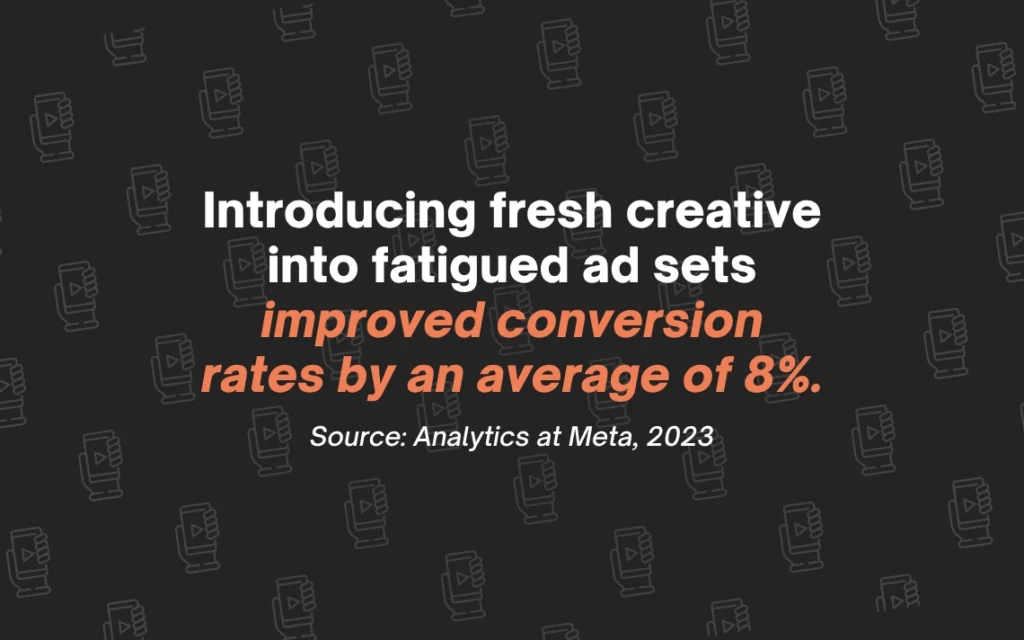
You should refresh things by using new hooks, new formats and new messaging angles. Think about what you’ve not tried yet. Maybe try video if you’ve been using static images, or lead with a problem-solution messaging if you’ve leaned on benefit-led before. Introducing fresh creative into fatigued ad sets improved conversion rates by an average of 8%, according to Meta’s own analytics research across roughly 26,000 cases.
Rethink Who You’re Talking To
The next area of your ad that needs attention is the audience. Changing the creative isn’t going to fix the problem if you’ve been targeting the same audience segment for an extended period of time.
Ensure you are excluding audience members who’ve recently converted, and consider adjacent segments that you have not yet explored.
Changing your audience can help you determine what the actual cause of the ad fatigue is: is it overuse of creatives, or are the people seeing the ad the real issue? Once you’ve determined this, it will help you shape future campaigns and prevent ad fatigue from kicking in with them.
Sometimes the Best Fix Is a Pause
It may sound counterintuitive, but there are some cases where pulling an ad entirely for a few weeks is the best method to fix ad fatigue. It can reset audience familiarity, particularly on platforms where the same users have been served the same ad repeatedly over a sustained period. How long to pause for, and whether pausing is even the right move, depends on where you are advertising. On TikTok, content cycles are fast, so the reset window is shorter. This means that often a couple of weeks can be enough. On Meta, an intentional pause of a few weeks, followed by a meaningful and thorough creative refresh, tends to deliver the strongest recovery in performance. On LinkedIn, audiences are smaller and more niche, so a pause alone may not be sufficient. You may need to look at expanding the audience instead, rather than waiting for familiarity to fade.
Conclusion
Ad fatigue isn’t a sign than you ad has been unsuccessful. Every ad will reach this point eventually if left to its own devices. The key to preventing ad fatigue is continual monitoring and adjustments. You need to know what signals to watch, how to build creative pipelines before they’re needed, and continually monitor the health of the audience you are trying to reach.
If your numbers are moving in the wrong direction and nothing obvious has changed, start with the signals in this article. The answer is usually in the data before it is anywhere else.