

One of the first questions everyone asks when creating a social media strategy is: how many times a week should we post on social media? The truth is, there’s no “one size fits all” answer to this question.
Some advice states that posting multiple times a day is the key. Others indicate 2-3 times a week is enough if you build that consistency.
The reality is that posting cadence is determined by many factors. This includes platform algorithms, industry and audience niche, content format, and even how much content is reasonable to produce without burnout! In fact, brands have actually been scaling back on their posting. The average is now 9.5 posts per day across platforms, down from 11 in 2022 according Sprout Social’s analysis of nearly 3 billion messages from 1 million public profiles.
Let’s take a look at what the advice says, and how you can use it to build the perfect content schedule for you.
The Great Debate: How Often Should You Post on Social Media?
Ask 10 marketing professionals for the perfect number of posts to publish each week, and you’ll likely get 10 different answers. Some will suggest focusing on content volume to reach the most people, whilst others will advise quality over quantity. The truth: all answers might be correct, depending on the brand it’s being aimed at.
Take these two case studies, for example. In 2016, Buffer was struggling with a decline in their Facebook engagement. They made the decision to cut their posting frequency on the platform by 50% and focus on fewer, higher-quality posts. By 2018, the average weekly reach had nearly tripled, from 44,000 to 120,000. Daily engagements also rose significantly. In this case, the strategy for improved results was to reduce their posting frequency and focus on quality content.
In contrast, when Eurpac hired its first social media manager, he amended their strategy from posting once a month to 3-4 times a week. The result was a 46% increase in followers and a 57% jump in engagement in just six months. So, if using this case study as an example, it indicates that more posts equal better results.
So which strategy should you follow?
Hootsuite’s 2026 analysis found that engagement rate peaks when just publishing two posts per week on Instagram, Facebook, and LinkedIn. But on TikTok, peak engagement rates occur when posting 14 times a week. Meanwhile, Buffer’s study of 2 million Instagram posts found that 3–5 posts per week more than doubles follower growth compared to posting once or twice. What this proves is that posting frequency isn’t a fixed number. It’s a balance between what your audience expects, what your platform rewards, and what you can realistically sustain.

What the Data Reveals About Posting Frequency
Not only do different sources contain conflicting guidance, but advice on post cadence also varies from platform to platform. Let’s take a closer look.
The consensus for Instagram is that more frequent posts are the way to accelerate growth. 1-2 posts weekly is the benchmark minimum.
According to Buffer, the sweet spot for post cadence without burnout is 3-5 posts per week. They advise that posting between 3 and 5 times weekly can more than double the follower growth rate, compared to posting 1or 2 times weekly. Their data heavily leans into the idea that more posts mean quicker growth.
But many people worry about posting too frequently, worrying they will annoy their existing followers by popping up on their feed too often. This is likely an unfounded concern. What’s important to remember about Instagram is that not every post you publish gets shown to every follower. The algorithm is smart and ever-changing. It will spread your content out on people’s feeds, whilst delivering more of your content to followers who actively engage with it, and avoiding those who don’t.
On the flip side, going silent and not posting enough has a negative effect too. Buffer’s data found that weeks without a post led to account stagnation and follower decline. This is proof that consistency matters more than perfection.
Despite having the same parent company, unlike Instagram, Facebook increasingly values quality over quantity when it comes to post cadence.
According to Socialinsider’s 2026 benchmarks, Facebook posting frequency dropped by 48% between 2024 and 2025, going from an average of 47 posts per month to just 24. This sharp reduction in frequency suggests brands are moving away from volume and toward curated, valuable content that stands out on crowded feeds.
The engagement data also backs this up. Hootsuite’s analysis found that Facebook’s highest engagement rate (2.08%) is achieved at just 2 posts per week. This is a lot lower than many brands assume it will be.
Having said all that, posting less might not be the right strategy for every brand. ZoomSphere’s Frequency Formula report writes that for brands looking to maximise reach, rather than per-post engagement, they should push to 10+ posts per week to drive visibility. For most teams, this number is unrealistic. But focusing on 2–5 thoughtful posts per week will deliver stronger engagement without the burnout.
So, the conclusion for Facebook is that strategies should focus on fewer, high-value posts over heavily overpopulated content calendars.
TikTok
The strategy of “more is more” is probably most consistently relevant for profiles on TikTok. Where Facebook rewards quality over quantity, TikTok plays by the rules of high-volume, consistent posting.
TikTok’s own Creator Academy advises that publishers posting multiple times a day see higher video views and For You feed exposure. Industry guidance is settling on 1-4 posts per day as the recommended range. This frequency far exceeds what’s expected on other platforms.
The reason TikTok behaves so differently is because of its algorithm. Unlike Instagram or Facebook, TikTok’s For You Page evaluates each video independently, giving each one a fair chance at discovery. This means posting multiple videos a day isn’t diluting the attention that each one gets. The platform also rewards consistency. Accounts that maintain a steady posting rhythm tend to outperform those that go quiet for weeks at a time.
All that being said, you can’t just consistently produce low-effort content and expect to see growth. There needs to be an element of quality, valuable posts in the mix too. You should aim for at least 3–5 quality posts per week within your broader posting schedule to hit the algorithmic sweet spot.
Quality is the non-negotiable foundation when building a strategy around post cadence on LinkedIn. This is then being combined with an increasing frequency of posts over the past few years.
Buffer analysed over 2 million posts from 94,000 accounts on LinkedIn. It found that shifting from 1 post a week to 2-5 posts a week was having drastic results on a page’s growth. If you can push this even further to 11+ posts per week, you’ll see nearly triple the engagements per post compared to once-a-week posters. This pattern is consistent across accounts, regardless of size.
The LinkedIn algorithm rewards early engagement on posts, as it signals relevance and quality. According to AuthoredUp’s 2026 algorithm research, the first 30–60 minutes after posting are critical. Posts that gain engagement in this window can see significantly increased reach. This means on LinkedIn, not only is it important to nail the frequency of posts, but the time/day that the posts are being published should also be factored in.
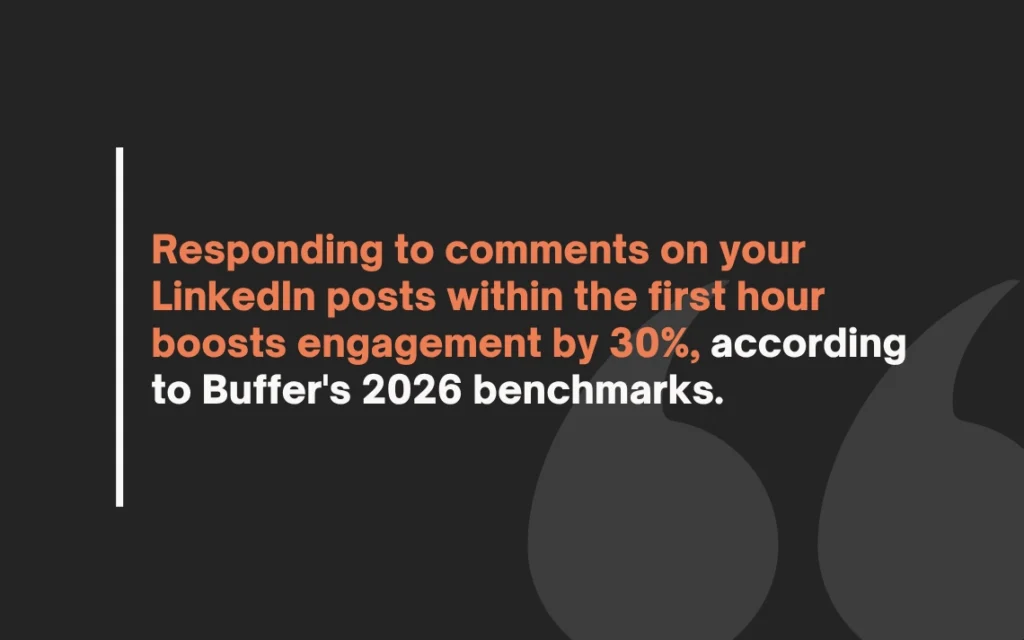
Compared to other platforms, content on LinkedIn tends to have a longer shelf life. This means posts can continue appearing in feeds for days or even weeks after publishing. You can also increase the chance of content appearing on feeds for longer by continuing conversations that are happening in the comments – it boosts engagement by 30% according to Buffer’s benchmarks.
Creating Your Own Posting Strategy: A Step-by-Step Guide
The data about posting frequency can give you a great starting point, but the nuances also need to be considered. Every profile on every platform will have a slightly different optimal posting cadence and posting times, so here is a guide to help you dig into what yours is.
Step 1: Establish Clear and Measurable Goals
When determining the perfect number of posts for your profiles on each platform, the first step should be outlining your goals for the account. Is the aim to drive brand awareness and recognition from as many new people as possible? Are you hoping to tap into a new audience subsection? Are you wanting to nurture your existing audience and position yourselves as experts in your industry
If you set clear goals, this makes every other decision easier, from posting cadence, which platforms to focus on, and what metrics should be tracked.
We recommend setting your goals for social media goals using the SMART framework: Specific, Measurable, Achievable, Relevant, and Time-bound. Instead of setting your goal as “grow our Instagram”, you should be setting something that you can measure so as to judge your success. For example, “Increase Instagram reach by 25% over the next 3 months by posting 4 times per week and using location and hashtag tagging on every post.”
Once your goals are set, write them down somewhere visible. Every time you’re deciding what or when to post, those goals should be the filter.
Step 2: Analyse Your Target Audience’s Behaviour
Your audience will play a huge part in how often you should post on each platform. You need to determine when your audience is usually online, and how they like to consume content when they are.
Posting cadence should consider not just the frequency of posts but also their publication times. It should reflect when your audience is most likely to see and engage with your content.
Every major platform has built-in analytics that show when your audience is most active and what content they respond to. For example, Instagram Insights show you your most active follower hours and days, and TikTok Analytics reveals follower activity, top-performing videos, and traffic sources.
You should use these tools, industry benchmarks on customer behaviour, alongside your own audience research, to determine what kind of activity aligns with how they’re already behaving on each platform.
For deeper audience research, our guide to target audience research walks through how to build a clear picture of who you’re trying to reach beyond just platform analytics.
Step 3: Benchmark Against Your Industry
Step 3 is about considering your industry. Posting frequency varies significantly across industries. What works for a fast-moving fashion brand won’t necessarily work for a B2B law firm. You need to understand where your industry is positioned as a starting point to build your posting frequency from.
For some industries, like entertainment and media, it’s all about volume. They capitalise on trends and rapid product cycles, and can churn out content across multiple platforms.
In contrast, some industries, like financial services and healthcare, see better results from less frequent but more considered content, where they deliver value to their audience and establish credibility.
Hootsuite’s 2026 benchmarks report has pulled data on what posting frequency looks like across various industries:
- Education: 28 posts per week for peak engagement of 4.52%
- Retail: 25 posts per week for peak engagement of 3.66%
- Entertainment & Media: 13 posts per week for peak engagement of 3.70%
- Healthcare: 2 posts per week for peak engagement of 3.89%
- Travel & Hospitality: 2 posts per week for peak engagement of 3.52%
This large spread of posting frequency reiterates the need to take this into account when determining your own cadence.
Step 4: Build a Content Mix That Supports Your Cadence
You can have the perfect posting cadence for your goals, audience and industry, but if you’re not publishing content that actually resonates, it means nothing. In fact, posting more often with low-effort content can actively hurt your performance.
A varied, well-planned content mix lets you post at a high frequency without sacrificing quality. The goal should be to have a mix of high-effort “hero” content alongside lower-effort, repeatable formats.
A common rule of thumb is the 80/20 split. 80% of your content should educate, entertain, or inspire, and only 20% should directly promote your product or service. This keeps your audience engaged rather than feeling like they’re being constantly sold to.
Each platform rewards different content types, so your mix should look slightly different on each. For example, on Instagram, Reels and Carousels are outperforming static posts currently, so these should be the focus. Whereas on TikTok, it’s all about short-form video, trending audio and hooks in the first 3 seconds.
When planning your content mix, we’d suggest looking at it monthly rather than weekly. Try to block out time to create your high-effort content, like carousels, videos, and long-form posts, and use the gaps in your calendar for lower-effort formats like Stories or community-driven posts. This way, you can keep up with your posting cadence consistently without.
Step 5: Experiment and Monitor
Once you’ve set goals, understood your audience, benchmarked against your industry, and built a content mix, it’s time to put it into practice.
The perfect posting frequency is built through testing, measuring, and adjusting based on real data from your own audience.
When testing, try not to change everything at once. Pick one variable to test, like frequency, and then implement and monitor it over a defined period of time. For example:
- Week 1+2: post 3 times a week
- Week 3+4: post 5 times a week
- Week 5+6: post 7 times a week
Whilst this is happening, make sure you keep all other variables consistent, such as content quality, format mix, and posting times. At the end of the testing phase, you can compare the data to learn more about the impact that variable has on the results you wish to achieve.
The metrics you use to measure success will vary depending on the platform and the goal you have. When it comes to judging posting frequency effectiveness, the metric often used to judge success is engagement rates. It tells you whether a higher frequency is diluting per-post performance or amplifying it.
To gather these performance metrics, you can opt for using a platform’s native analytics tools, or tools like Hootsuite, Buffer, Sprout Social, or Later will pull everything into one dashboard.
For a clearer breakdown of which metrics matter most and how to interpret them, our visual guide to social media metrics walks through the key indicators platform by platform.
Step 6: Refine Your Strategy Over Time
ding your optimal posting cadence, unfortunately, isn’t something you can find once and follow forever. Platforms evolve, algorithms change, audiences shift, and what worked six months ago may not work today.
Your posting strategy should be ever-evolving. You need to review performance regularly and adjust what you’re doing based on your findings.
These review intervals are what we follow to ensure our strategies are always optimised and performance remains high across our accounts:
- Weekly – Check top-performing posts and any unusual dips or spikes
- Monthly – Deeper analysis of engagement trends, follower growth, and content mix performance
- Quarterly – Strategic review of overall goals, posting cadence, and platform priorities
- Annually – Full audit of your strategy against industry benchmarks and broader trends
By following these review patterns, it prevents our strategies from drifting into autopilot and helps us identify areas that need adjustments before performance dips become a serious problem.
Conclusion
So, how often should you post on social media? The honest answer is it depends.
It depends on the platform, your industry, your audience, your content quality, and what you’re realistically able to sustain. Posting twice a week could deliver peak engagement for a healthcare brand on Instagram, while a TikTok creator might need to post daily to see meaningful growth.
What the data does make clear is that consistency matters more than perfection. Posting regularly with content that resonates will almost always outperform random bursts of high-volume posting. Use the benchmarks in this article as a starting point to refine your own approach and find the schedule that genuinely works for you.