
Travel is one of the most visual categories on social media. So why does almost every travel brand feed look exactly the same?
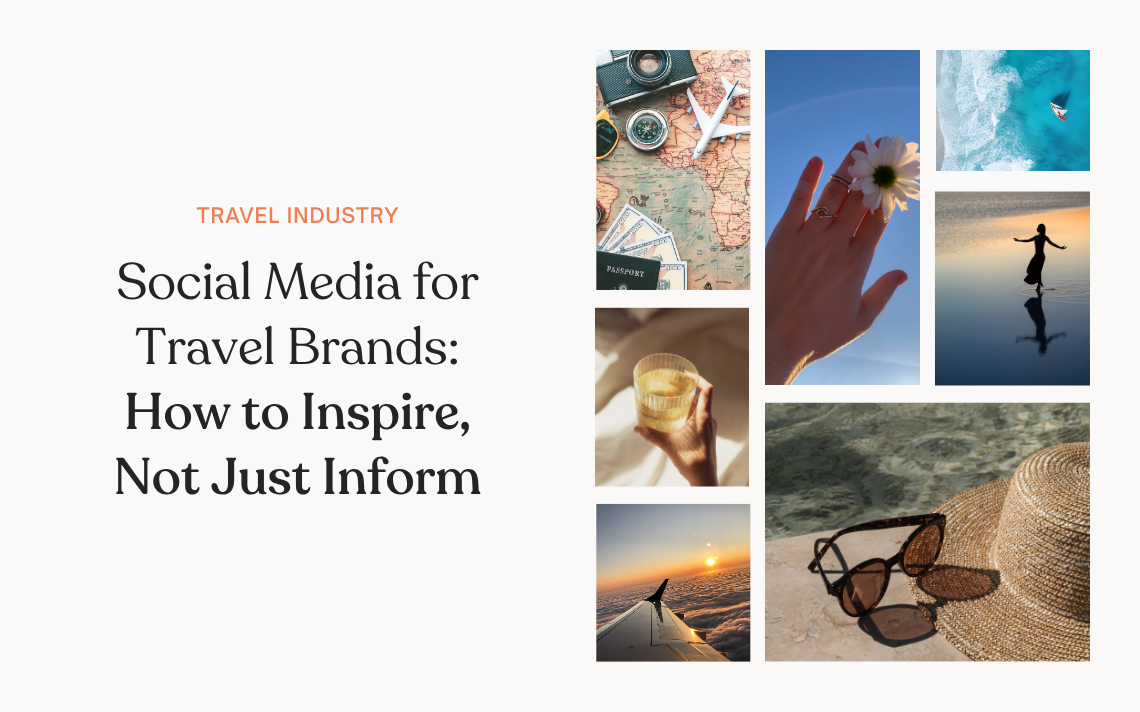
The mistake most brands are making is using social media to inform their audience, rather than inspire them. Scroll through most travel brand accounts, and you’ll find the same golden hour shots, poolside carousels and “book now” captions. It delivers the information, but it is instantly forgettable. 75% of travellers use social media to choose where to go. If your brand looks just like every other travel page, you’re never going to stand out and stop them scrolling.
Investing efforts in better storytelling is what will help you succeed. You don’t need to have highly polished content or large budgets; you just need to provoke an emotion through sharing real stories and experiences so that the audience can imagine themselves in the story.
This article is for people who want to move beyond pretty pictures and actually drive bookings and loyalty. The shift is possible with the right content and mindset. Let’s show you how.
Information Isn’t a Strategy
Most travel brands follow the same content pattern. It all reads more like a travel brochure rather than a social media profile. They lean heavily on available dates, prices, hotel amenities, and “book now” CTAs. Although this information is accurate, it’s not provoking any sort of emotional response.
The algorithms across most major platforms reward reactions rather than information. Travel brands should be aiming for engagement rates of 3–3.5% on TikTok and 2–2.5% on Instagram, according to Dash Social’s 2026 benchmarks. But the average across the industry sits at just 0.4%, showcasing that most brands are approaching these platforms completely wrong.
Forgettable travel brands produce content that informs. Successful travel brands publish content that connects. People don’t want to compare which hotel has more pools or more selection in the buffet. They want to know about real stories from people who’ve stayed there, and how their trip made them feel. The irony is that the travel brands posting the least salesy content are often the ones driving the most bookings.
From Destination to Desire
If you want to succeed on social media as a travel brand, you need to understand why people book. Nobody books a holiday to tick off a location. They book to feel something. It might be to rest, to reconnect, to have an adventure or to briefly become a different version of themselves.
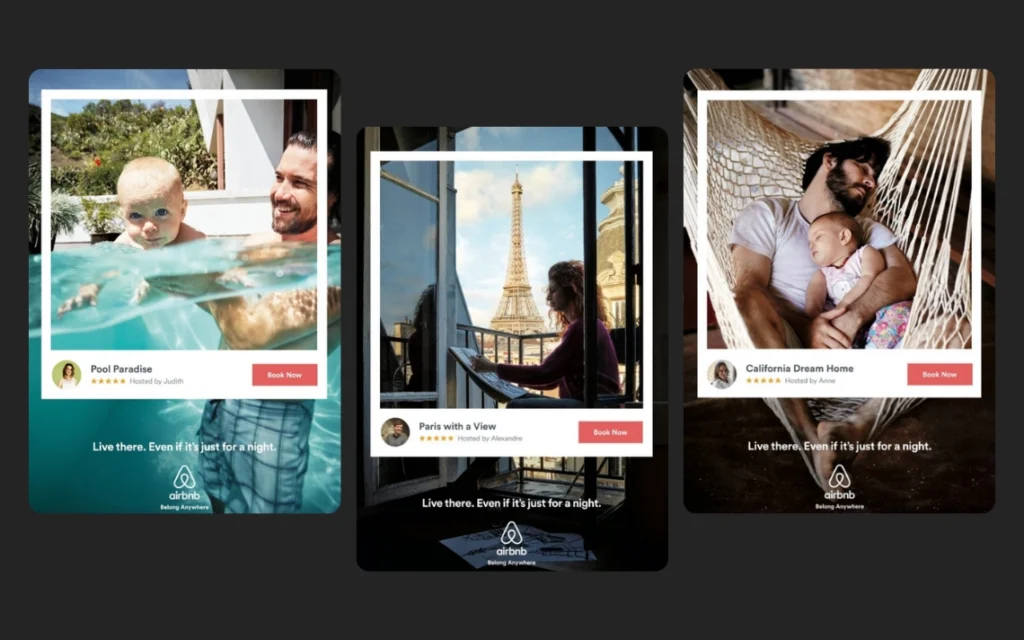
Airbnb are a great example of a brand that understood this concept. They launched a campaign called “Don’t Go There, Live There”, designed to sell the experience of travel. The campaign was built on insight from their own consumer research, which stated that the overwhelming majority of Airbnb users chose the platform because they wanted to feel like a local when they travelled, not a tourist. Rather than listing features, Airbnb built their entire social and brand presence around that concept. The campaign reached 2.5 billion media impressions and was followed by a significant increase in bookings, alongside a 50% increase in home listings.
You can apply the same thinking as Airbnb to your own travel brand if you shift your strategy from “here’s what we offer” to “here’s who you’ll be when you’re with us”. Instead of “here’s another golden hour sunset”, focus on an unexpectedly authentic meal or a conversation with a stranger. These specific moments spark imagination from your audience, which will ultimately create desire and lead to bookings. Make your audience the centre of the story. If they can imagine themselves in a moment, you’ve won their attention.
The Content Types That Actually Drive Bookings
If your content calendar is full but bookings aren’t following, the issue is probably your content format. Here are the content formats that consistently work for travel brands, not just for reach, but for turning an engaged audience into paying customers.
Real People And Real Trips
Your past customers are your most powerful marketing asset, and most travel brands are massively underusing them. Polished, highly designed posts feel overly curated and lack personality. But when your audience sees a real person standing in front of a sunset with a genuine caption about how a trip was a once-in-a-lifetime experience, they believe it.
And the data backs this up. 84% of people are more likely to trust a brand that uses UGC in their marketing, and 77% say it influences their purchasing decisions. Not only does UGC content increase trustworthiness, but it also helps with another common issue brands face: content volume. UGC and people-led content don’t rely on huge production budgets and can be generated with minimal effort and time commitment.
The main thing to ensure is that you have a structure around your UGC output. You want to actively encourage participation through branded hashtags, post-trip prompts, and resharing content people create. Our article on social proof will help you learn more.
Behind-The-Scenes
Anyone can post a beautiful beach. Not everyone can introduce you to the local guide or show you what it actually looks like when the guests have gone home.
Behind-the-scenes content builds trust in a way professional, polished photography doesn’t. If a brand is willing to show the imperfect side of an experience, audiences are more likely to believe the shiny, glamorous bits too. It also solves a big purchase barrier in the travel industry – the expectations versus reality gap. People are aware that a multitude of issues often get hidden through marketing and promotion, but if you’re showing what’s behind the scenes, the audience feels like they’re getting a more complete picture of what they will experience.
This format works particularly well for tour operators, retreats, and experience-led travel brands where “what actually happens” is a genuine question in a potential customer’s mind.
Story-Led Video
Short-form video is the most powerful content format travel brands can create right now. Yet most are wasting it by focusing on the wrong things. They lead with the logistics, like dates and pricing, and forget about trying to evoke an emotion.
The best Reels and TikTok videos make you feel like you need to be there too. People are 22 times more likely to remember information when it’s delivered through a story rather than as standalone data points. If you can get an audience to see themselves in the situation, they will remember your brand name and services when it comes to booking, even if they’re not ready to book at the moment they see your content.
How you structure your video is what’s going to make the difference to your storytelling. Open it with something that creates a feeling or a question and leave them with the need to take action. You’re not trying to create a feature-length film with your social media content. Often, a 20-second video with a clear emotional arc will outperform a 3-minute highlight reel with no purpose. Music and voice-overs are something that should also be utilised. The same footage with different audio tells a completely different story.


Honest Content Converts Better Than Highly-Polished
People have become wise to the gap between what’s on Instagram and the reality of what things look like. Audiences are increasingly drawn to brands willing to be honest about what an experience genuinely involves.
Honest content doesn’t mean it’s got to be negative; it’s just specific. “Here’s exactly what to expect from this trip” is reassuring. It removes purchase anxiety, answers the questions people are too embarrassed to ask, and means that whoever books already knows what they’re signing up for.
Content written or filmed as though by someone who just got back from their travels performs particularly well because of this. 80% of consumers research products and services, including travel, on social media before making a purchase. The decision is being made without even looking at your website. “What nobody tells you about travelling to X” or “what a week in Y actually looks like” will usually outperform aspirational content for conversion, even if it doesn’t rack up the same vanity metrics.
How to Stay Relevant After the Suitcase Is Unpacked
A lot of travel brands look at the end of the customer journey as the moment the customer completes their booking. But this shouldn’t be the case. Social media can help to keep your brand’s name at the forefront of a customer’s mind, even when they’re not actively looking to book a trip.
The challenge is that many customers only book travel once or twice a year, yet they’re on social media every day and see posts from your competitors cropping up. You need to ensure that when the time comes for them to book their holiday, your brand is the first name that comes to mind. 76% of travellers share holiday photos on social media after their trip. Your past customers are already creating content and talking about travel. The differentiator is whether your brand is part of that conversation.
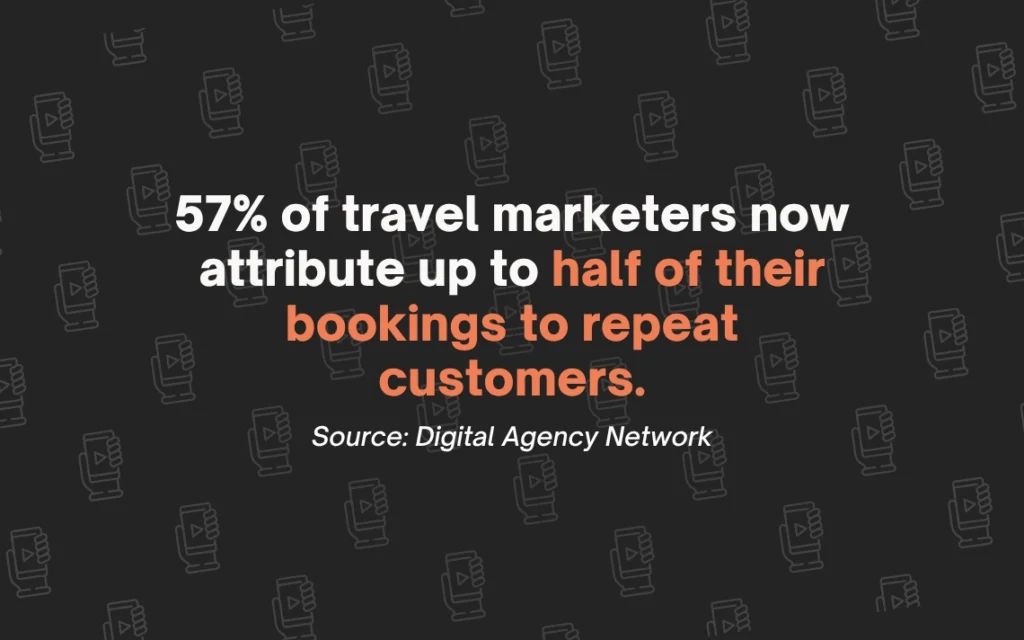
Keeping your content going through the other 11 months where the customer isn’t travelling doesn’t require a huge shift in what you’re doing if you’re already sharing the kind of content we listed in the previous section. You want to produce content that keeps them embedded in the world of travel. Think bucket list inspiration, travel tips, moments from past guests and their experiences. The goal is to stay relevant in the conversation without trying to push a sale. Your past customers are your warmest audience and are arguably more valuable than brand-new bookings. Repeat customers cost less to convert and are more likely to refer others, meaning they stay loyal and do part of your marketing for you. Not only are they likely to rebook trips with you if you stay top of mind, but they’re also likely to advocate for the experience they had with you.
Conclusion
The travel brands that see the most success on social media have stopped broadcasting their message and started connecting with their audience.
Leading with emotion, using real people and real stories, and maintaining a presence even when your audience isn’t making bookings will drive bookings. It will allow you to build real connections with people who are likely to travel with you.
Establish trust with your customers before the booking happens, and you’ll be rewarded with repeat customers who also tell all their friends about you.