
Crew-Led Storytelling: A Practical Guide to Authentic Airline Branding

Airlines are inherently human-centred businesses – they are built around connecting people across the world through transportation. Unlike with other forms of travel like buses and trains, there’s a level of service and human interaction that is expected when travelling by air. So, why is it that so many airlines brand themself in such a corporate way, avoiding any kind of human storytelling?
United Airlines is an example of the power of switching social media strategies to a crew story-led approach. In 2022, the airline made a pivot from its corporate strategy to focus on more UGC content. Employees were encouraged to use #BtThere to share their stories of life in the sky. Over the next year, they saw a 200.5% increase in video views, 85.2% increase in engagement and 33.8% increase in net new followers on their Instagram.
Authenticity builds trust, and United Airlines has done just that. Putting their crew at the heart of their social media created human connection within their brand, which is often missing.
Why Crew Storytelling Matters for Airline Brands
Although all airlines do the same basic thing – get you from A to B via plane – human interactions is what differentiates one airline from another. The crew, in particular, are the core of those interactions. They reassure you if you’re a nervous flier. They congratulate you if you are travelling to your honeymoon destination. It’s the crew who help you assist you with your luggage if your arms are full. If they are part of an airline’s USP, it’s logical that they are a focus of an airline’s social media strategy, too.
Crew-led storytelling outperforms more corporate-style content through social media because people trust people. Edelman’s 2024 Trust at Work report found that 66% of consumers trust “regular employees” over CEOs or corporate spokespeople. They help to bridge the gap between brand promise and the lived reality, with unique access to real stories. By showcasing crew stories, airlines reveal the heart of their brand and create credibility.
The 4 Core Crew Storytelling Archetypes
When looking at the type of stories airline crew are sharing, some patterns emerge. The most effective stories fall into one of a handful of archetypes – human, expert, personality-driven or lifestyle. Each plays a different role in humanising the brand, and knowing the difference helps airlines use crew voices with intention.
The Human Story
The purpose of human stories is to show the heart of the brand. It highlights human interactions and taps into customers’ emotions. Crew are able to show who they are beyond their uniform, bridging the trust gap in a way that corporate content can’t.
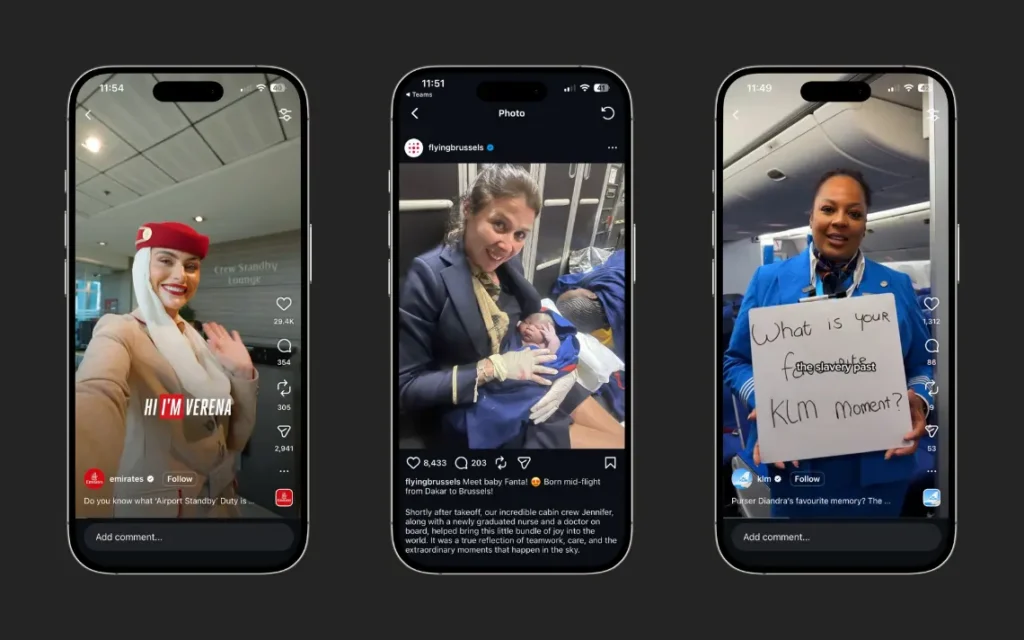
An excellent example of the human story content archetype was from Brussels Airlines. One of their customers gave birth mid-flight from Dakar to Brussels. The airline posted an image of the crew and baby on Instagram, highlighting crew and customer involvement, and celebrating one of the oldest human stories there is: childbirth. Posts like this highlight the caring nature of the crew themselves, and in turn, the brand feels more caring and supportive to its audience.
The Expert Story
Expert stories resonate on social media because they offer a glimpse into a world we don’t usually see and spark curiosity. Using crew to demystify things like turnarounds, cabin features and staff scheduling builds credibility for the airline. These stories position the crew as professionals, not just service providers.
Emirates used this story archetype when they ran their Life Through an Emirates Cabin Crew Lens social media campaign. Selected members of their cabin crew team took over the airline’s Instagram page to share behind-the-scenes insight into their world. By letting crew members narrate and film their own experiences, Emirates turned its employees’ expertise into engaging, credible storytelling. Following this campaign, Emirates became the first airline in the world to reach 1 million followers on Instagram in 2016.
The Personality Story
Not every crew story has to be emotional or educational – sometimes humour-led content can resonate more. Airlines that give their employees the freedom to express their personalities (safely and within guardrails) find that their audience perceives them as warmer and more progressive.
Platforms such as TikTok and Instagram see a high demand for comedic content. So when airlines can lean into this content style, they tend to get a good reaction on these platforms. The content humanises the airline, signalling a healthy internal culture, which affects the level of service a customer receives.
Southwest Airlines has been known for its warm and funny personalities long before social media, but now videos of crew filmed by travellers are surfacing online. Unscripted clips of cabin crew flight announcements and comedic customer interactions help to humanise the airline. The result is these videos often go viral. Although the clips might not be directly posted by the brand, the increased positive visibility helps support the customer’s perception.
The Lifestyle Story
By the nature of what air travel is, airlines have a global audience and therefore represent a wide spectrum of cultures, languages, backgrounds and personal identities. When brands allow their crew to showcase their lived experiences, it becomes more relatable and appealing to a wider group.
Airlines providing a platform for staff to share their favourite layover spots, cultural traditions, or speak in their native languages, allows audiences to see the world through real human perspectives. It honours diversity without commodifying it, positioning crew as ambassadors of global connection.
A powerful example of lifestyle-led storytelling comes from KLM’s video featuring cabin crew member Diandra. This post shows her talking about her favourite memory at KLM: being asked to do the Keti-Koti flight to Curacao to mark the abolition of slavery in Suriname and the Dutch Caribbean. Her story connects culture, history and identity, honouring diversity without putting the crew on display.
How Crew Storytelling Works on TikTok, Instagram, YouTube, LinkedIn
Although storytelling is important and valuable on all social media platforms, some reward certain types of storytelling more than others. Depending on the airline and their content tone will determine which platform their content will resonate best on.
There will be an ideal platform for any story type – the key is to not force it to work on platforms it’s not suited to. Airlines don’t need to have a presence across all channels; if the content doesn’t meet the audience’s needs, it shouldn’t be posted.
TikTok
Playful, personality-driven stories from crew members are what will perform best on TikTok. Short explainer videos, day-in-the-life clips, cabin prep routines, and humorous/personal moments are the kind of content airlines should be encouraging their crews to post here.
Authenticity is key on TikTok. The videos don’t need to be polished or highly edited to perform well. Low-production videos showing the crew members’ faces instantly humanise the uniform and break down formality. They should be showcasing their individuality and building relatability.
Visual and aspirational content performs best on Instagram, so this is the kind of storytelling crew that should be posting. Beautiful travel photos and lifestyle stories showcase the aspirational side of working for an airline.
The content should be more polished than on TikTok, but still retain authenticity. Airlines can position the cabin crew as experts, whilst maintaining the human side of the role with personal travel content.
YouTube
YouTube is suited to longer videos than TikTok and Instagram accommodate. This platform is a place to dive deeper into topics and deliver more educational or narrative-based storytelling content.
For example, expert stories like “How we turn around an aircraft in 45 minutes” and human stories like crew interviews perform well on YouTube because they drive brand value. YouTube audiences seek behind-the-scenes and educational content, which is part of the platform’s foundation. Airlines should be creating content people want to watch, not serving up the type of content they want to be making.
LinkedIn is arguably the most corporate of the social media platforms. But that doesn’t mean cabin crew storytelling shouldn’t play a part in an airline’s strategy.
LinkedIn positions crew as skilled professionals, not just service roles. Cabin crew posts about cultural milestones, or their career pathways can help support an airline’s branding and recruitment. It also helps to strengthen internal culture within the organisation and adds credibility to airline’s values.
How to Build a Crew-Powered Brand Strategy
In order to make crew-led storytelling work for your airline brand, you need to set out frameworks. These need to protect crew, respect their lived experiences, and ensure authenticity isn’t lost in corporate polish.
The goal isn’t to turn the crew into influencers; it’s to create a space for them to share their real experiences in a safe and sustainable way. Bonus: If you’d like to learn more about finding travel influencers look here.
Below are the steps that will help you empower your cabin crews and establish long-term brand value.
Define your storytelling archetypes
Your first focus should be deciding which story archetype your airline aligns closest to: human, expert, personality or lifestyle. If you can define your storytelling type, it will allow you to keep stories varied and authentic, preventing the posting of generic cabin crew content that doesn’t resonate with your target audience.
Defining the archetype will also be beneficial for the crew, providing guardrails for their content to sit within, without scripting it. It will ensure that the crew content aligns with brand values and audience needs.
Involve Crew in Story Development
Your crew will feel more passionate about the content they are creating if you involve them in the ideation stage. The stories are centred around them, so it makes sense for them to be involved in guiding how stories develop.
One way to do this is to set up small story circles, opt-in brainstorms, or crew content committees, with the purpose being to co-develop story ideas, cultural moments, and behind-the-scenes concepts. These feedback methods prevent tokenism and ensure the authenticity of the storytelling. Airlines have found that crew-led ideation produces more surprising and human stories than without it.
Define Empowering Guardrails (Not Creative Handcuffs)
Although the content is being led by the crew, there should still be clear guidelines in place to ensure brand alignment, without limiting creativity.
You should try to avoid creating “don’t” rules, instead focusing on safe zones for the crew to align their content with. Create a list of safe topics, story formats and tone principles that the crew can be creative around.
Imposing too many rules, or making them too complex, will cause staff to be less willing to participate and suppress the authentic feel you’re trying to create. Guardrails work best when they build confidence, not confusion.
Give Crew the Tools & Training to Tell Stories Safely
Training is essential in all aspects of crew life, including creating content.
Crews should be equipped with knowledge of safe filming practices (no passengers identifiable, no restricted areas, etc.). This should also include lessons on how to protect privacy and cultural sensitivity, as they are serving as a face of the airline.
You might also want to consider creating templates and holding small workshops on how to create the best content. Not only will this increase the quality of what they create, but it will give them the confidence to produce more in the future. Your goal should be to make storytelling feel accessible and safe.
Build a Workflow That Makes Participation Easy
Asking your crew to tell their stories shouldn’t feel like an inconvenience for them. Try to fit the storytelling around the crew’s existing schedule and make the submission process as frictionless as possible. Consider creating an internal portal or WhatsApp that they can upload their content to easily, whilst they’re on the go.
Try asking the crew to only share the raw clips and having your internal social teams refine them. This will create less work and pressure for the cabin crew, and will result in a high-quality and brand-aligned output.
The processes of selecting crew to participate in the storytelling should also be opt-in rather than compulsory. You could offer credits or internal shoutouts for those who choose to get involved as a way of incentivising. Remember – crew who do not want to be involved won’t make engaging content; storytelling needs passion.
Measuring the Impact of Storytelling
Measuring the impact of introducing crew-led storytelling into your strategy is about context just as much as it is about metrics. Brand perception and quality aren’t something that can have numbers put to them, but they are important to airline brands are therefore a valuable result to measure.
- Measure perception shift – crew storytelling is designed to build trust and warmth for the brand. Look for an improvement in sentiment (more positive comments, fewer complaints) and brand personality associations (more mentions of “human” or “authentic”). This indicates that the storytelling has had a positive impact on brand perception.
- Engagement quality – crew-led stories often encourage deeper engagement, such as longer watch times and more shares and comments. Additionally, these engagements are more often valuable than likes and reach, as they show that the content is resonating on a human level.
- Monitor growth from the right audiences – if an audience member doesn’t plan to engage or fly with an airline they are not the right audience to be growing. Crew stories naturally attract followers who align with travel and culture. They are likely to be a contributing factor in the right audience growth.
- Platform consistency – the crew storytelling will quite likely improve an airline’s coherence across TikTok, Instagram, YouTube and LinkedIn, making them all feel more human. This running thread across platforms cements the brand values for multiple audiences and indicates the archetypes are working in practice.
- Avoid measuring individual crew performance – brands shouldn’t be measuring which crew members content performs better or worse, but they should be evaluating the system or concept behind the story instead. Crew storytelling isn’t the same as influencer marketing and should never turn into performance pressure.
Conclusion
Crew storytelling reflects the emotional reality of flying, something corporate content can’t replicate. Examples from United, Brussels, Emirates, KLM and Southwest showcase how crew-led stories increase trust and brand warmth, resulting in more visibility and success for the airlines.
Audiences expect all brands to be authentic and the use of “people like me” in content is rising because of this. The four story archetypes give airlines a structured way to show the full spectrum of what it means to be cabin crew, with each archetype serving a different purpose and audience.
The airlines that succeed are the ones that champion their crews’ voices. When real people tell real stories they become memorable and are the most powerful differentiator an airline has.