

Insurtech Brands are struggling with trust. It’s the foundation of the industry, but that trust is weakening. The proportion of customers who feel they’re treated fairly by insurance brands has dropped from 93.8% to 55.7%. Price increases, particularly at renewal, are driving a growing share of complaints.
Brands are trying to counteract this decline, but most are going about it in the completely wrong way. We’re seeing lots of emotional storytelling and purpose-driven messaging. Yet the credibility gap persists.
The problem isn’t that insurtech brands don’t have a mission; it’s that their storytelling doesn’t make people believe it. They’re not backing up their points with real moments and examples. For an industry built on data and evidence, this shortfall is having detrimental effects. It’s a familiar tension in finance marketing generally: an industry built on rigour, telling stories that don’t feel rigorous at all.
What’s not being understood is how people want to consume information on social media. Trust is built through what people are saying and sharing, not direct messaging from the brand. Mission-driven storytelling should be grounded in real, human proof and designed for how people actually consume content today
The Shift in Trust & Content Consumption
There’s been a reduction in trust in recent years over insurance itself, particularly when it comes to fairness. There’s not a lack of understanding of the product – over 85% say they know what they’re paying for. But that understanding isn’t translating into confidence.
The trust decline is happening in industries outside of insurtech as well. 92% of consumers trust recommendations from friends and family above all other forms of advertising. This represents a wider shift in how trust is being built online. The credible voices in most industries are no longer the brands; they are the consumers who speak about them.
Brands are falling behind the times when it comes to what consumers require, particularly on social media. People want peer-led, experience-driven content where they can assess brands through real stories. Consumers have become sceptical of overly direct or emotional brand storytelling, opting to put their trust in human creators and influencers instead.
Much of insurance marketing still relies on traditional, campaign-led storytelling. Brands aren’t keeping up with current customer expectations and, consequently, their marketing communication style across social media isn’t working.
Where Insurance Storytelling Goes Wrong
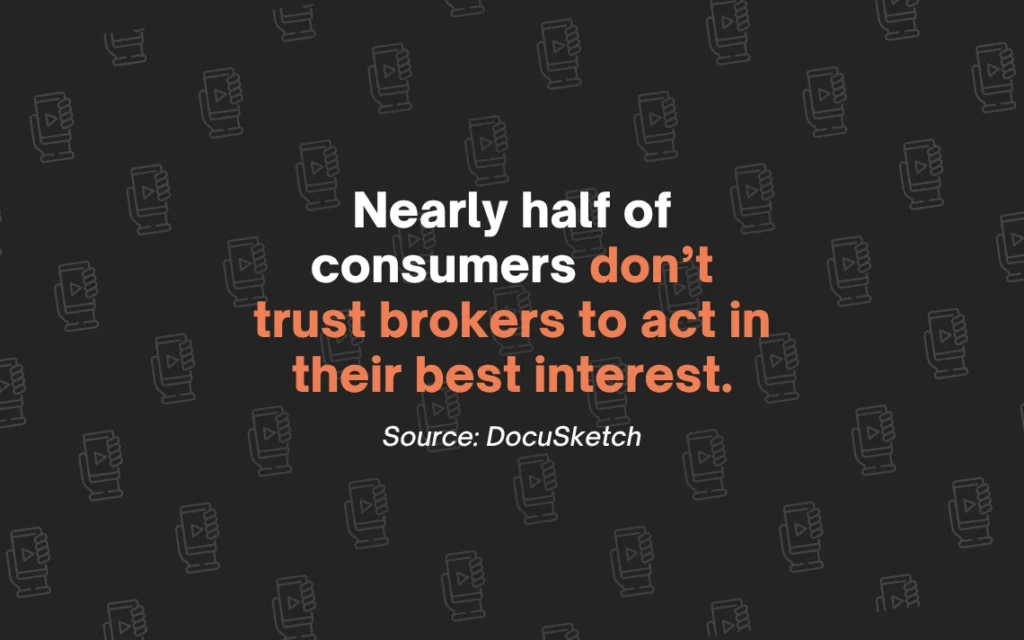
The mistake made by most insurtech brands is that they are telling people what to believe, rather than showing them. They’re not backing up their messaging with enough proof to bridge the credibility gap. The content may deliver a message that feels in line with their brand, but it’s not resonating with the audience it is reaching, so it isn’t doing anything to build trust.
Too Abstract To Believe
The way many insurtech brands approach their storytelling is way too vague and abstract. Insurance is a data-driven industry with clear, well-defined rules, so logically, the brand storytelling should match. Being overly conceptual in the messaging leads to vagueness, which invites scepticism.
Brands talk about “protection”, “peace of mind”, and “being there when it matters”, but none of this can be verified or proven. They’re not showing what actually happened, who it happened to, and what the outcome was. This is the kind of real-life storytelling that people want to see because it feels relatable. If people can’t picture it, they won’t believe it.
Told By Brands, Not People
Too many brands are narrating experiences, rather than letting their customers tell the story for them. Humans respond best to other humans, meaning trust sits with creators and customers who share their lived experiences. Brand voices often feel biased and, therefore, less credible. Who tells the story matters more than the story itself.
Over-Produced And Under-Trusted
Overly polished content on social media performs poorly because it’s instantly recognisable as advertising. It feels scripted and controlled, stamping out all authenticity, which is what social media users are really looking for on their feeds.
Platforms like TikTok and Instagram prioritise authenticity over production value. Insurtech brands that repeatedly put out content that is too polished are actually creating more distrust.
Learn how to make video content for storytelling on social media.
From Storytelling To Proof
We’ve established that the traditional storytelling insurtech brands are leaning into isn’t working. So what should they be doing?
Instead of just communicating values, brands need to be demonstrating them.
Messaging vs Evidence
The old approach to storytelling that many brands, including insurtech, are using simply isn’t resonating with audiences anymore. It focuses on brands defining the narrative as part of a larger campaign, and it feels very controlled and scripted. The core of this content is values and positioning, captured within an emotion-led story. They tell audiences exactly what they should be thinking and believing.
In contrast, the newer (and more successful) approach focuses on stories that are based on real events and real customers. Storytelling is centred around outcomes and specific moments, allowing an audience to observe the visible proof behind the messaging. Social proof is the best way for a brand to build credibility on social media, as it feels authentic and relatable to the audience.
The key move that insurtech brands need to make is to steer away from narrative-led storytelling and lean into evidence-based stories instead.
Learn more about different sources of social proof here.
What This Looks Like On Social
The best performing content for insurance brands will always be the pieces that feel like real life and not like marketing. Across social platforms, we are seeing new patterns in how these stories are being told.
The first is who is telling the story. Companies are starting to shift from stories led by the brand voice to stories led by the creator and customer voices. These stories are experience-led and usually told in the first-person voice. The storytelling hasn’t stopped, but the way they are being narrated has changed.
Another shift is the context of the storytelling. The focus is on real moments that an audience can identify with. We’re seeing storytelling around how claims are handled and common problems that occur. The most compelling stories are the ones that feel authentic because they’re centred around real moments.
The style of the story-led content is also changing. Social media isn’t a space for polished, high-budget videos anymore. People engage with more lo-fi content because it seems more genuine and therefore more trustworthy. It’s the style of content they’re expecting to see, and so it fits many people’s feeds better.
Insurtech Brands Currently Leading The Way
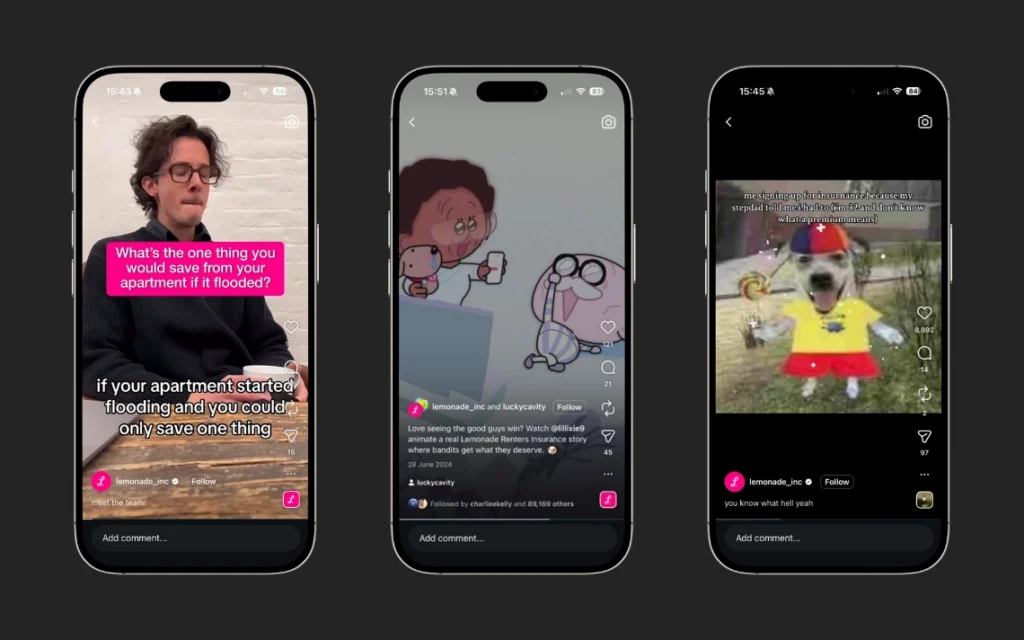
Lemonade is one of the brands that is nailing its storytelling approach. Their content feels fun and matches the kind of content we expect to see on social media. Currently, they are promoting their pet insurance products, but they’re not doing so by telling people to buy pet insurance. Instead, they’re using creators and meme-based content to encourage discussions around what it’s like to own a pet and common pet-owner problems. It invites genuine intrigue from their audience because they’re embedding the product in a real-life context. The relatability of their content builds cultural credibility and trust due to how the brand makes an effort to understand the audience before asking them to buy.
Another insurtech brand changing how they approach storytelling is Marshmallow. They create video content around common scenarios their audience faces, such as “Here’s what every new driver must know”. They’re also engaging with creators to create content that is grounded in social proof. Despite this, Marshmallow’s overall feed still leans towards brand-led content, which limits its potential of building a similar level of trust to what Lemonade have established. They’re starting to transition to this new way of storytelling, but are still prioritising brand narrative.
The contrast between these two brands demonstrates that consistency in storytelling approaches is the key to success. Brands that fully commit to experience-led content build credibility over time, while those that only experiment with it risk sending mixed signals.
A Practical Framework For Insurtech Storytelling
The shift insurtech brands need to make is towards content that shows rather than tells. In practice, that means rethinking how stories are created, who tells them, and where they’re shared.
Start With Moments That Matter
The first thing to consider when creating content for insurtech brands is what is actually going on in the audience’s life. What are the moments they commonly experience, and how does the brand fit into these moments? Perhaps the audience leads a busy life and doesn’t have time for lots of admin. Storytelling around busy lives and proving how the brand can help, not hinder, in these circumstances is vital.
Make It Specific
Once the moment has been identified, the narrative can be built around it. The more details the story can contain, the more credibility is built. For example, a brand wants to produce a video centred around claiming on car insurance. They can build this into a narrative by using a specific customer story, like “Jane”, who’s a busy parent and working mum, and needed to claim on car insurance after an accident in a car park. By being specific about the moment, the audience is able to picture themselves, or someone they know, in that situation. This is where the trust starts because it feels real and reduces doubt.
Put Real People At The Centre
The storytelling focus should always be about the people involved, not the product. Including real customers, trustworthy creators, or even employees in the story creates authenticity, and trust then follows. Psychologically, we are built to respond to other humans and real-life experiences. Utilising people in content will help hook people in instantly.

Create For Platforms, Not Campaigns
Brands need to mirror the posting style of creators on social media, rather than the style of other brands. Influencers and creators are the ones setting the standard for the kind of content people expect to see. This is where influencer marketing earns its place in the mix, not as an add-on, but as the format audiences already trust more than the brand itself.
People using social media want to see simple, engaging content that they can relate to and see themselves in. If brands can nail this, they will communicate authentically and reduce resistance.
Distribute Through People
66% of people rely on peer reviews/comments for decisions. If a brand encourages sharing and discussion around their product, they not only increase brand awareness but also amplify the trust associated with them. Distribution establishes validity as well as increases the brand reach.
Conclusion
The problem insurtech brands are facing is credibility. Customers understand what they’re buying, but they don’t necessarily trust the brand behind it.
Brands that can focus on real experiences and show proof of their value in their storytelling will build trust over time. And those who continue to rely on pushy brand-led messaging will continue to struggle to win over their audience. If you want help building that kind of proof into your content, get in touch with our team, we’re a social media agency that works with insurtech and finance brands on exactly this.