
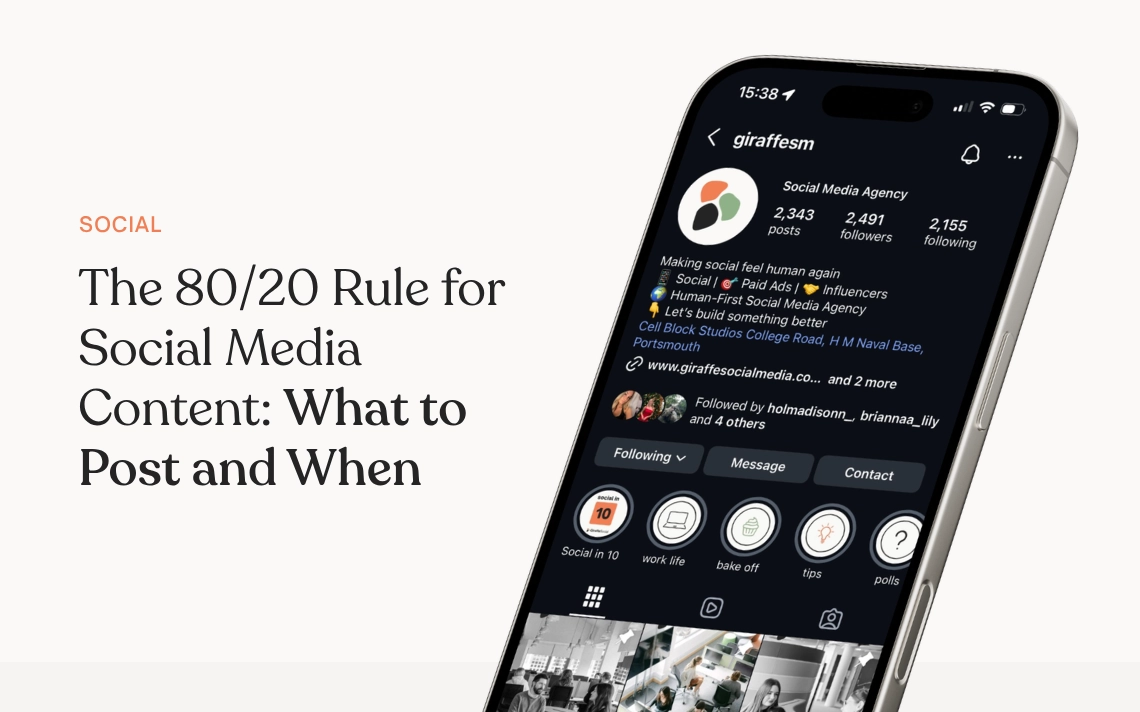
If you’re asking yourself how to stay relevant in a saturated market, the 80/20 rule is your answer. This rule was developed by industry experts based on algorithms, user behaviour and intent, and is the perfect way to grow your following and build the foundation for your social media strategy. As a social media agency, we see brands get this balance wrong constantly, either too promotional or too scared to sell at all. We’ve put together a helpful guide to the 80/20 rule, the way it works, and how to use it in your strategy.
We’ve put together a helpful guide to the 80/20 rule, the way it works, and how to use it in your strategy. In this guide, we’ll break down how the 80/20 social media rule works, why it matters, and how to apply it without overcomplicating your content strategy.
Why It Works
The 80/20 rule, also known as the Pareto Principle, makes your business feel more authentic and trustworthy through content that feels human and relatable. Audiences are more selective and sceptical, algorithms are becoming smarter, and competition is increasing, which means sales content doesn’t work anymore.
Audiences are looking for content that drives meaningful value. Algorithms favour engagement and reward content that people actually engage with, which means likes, shares, comments, and saves. Therefore, you need to be producing engaging content, and sales content isn’t engaging. The 80/20 content rule works because it mirrors how people naturally use social media.
This approach also builds long-term trust. Instead of constantly pushing for conversions, you’re positioning your brand as helpful and knowledgeable. Over time, this creates familiarity, making the 20% promotional content more effective.
Even Duolingo, a marketing pioneer, is using the 80/20 rule. Their CMO recently announced the brand is shifting its content mix away from “80% unhinged, 20% wholesome” toward something far more balanced.
What Does Value-Driven Content Look Like?
The 80/20 rule means 80% of your content should be engaging and high quality, and provide your audience with value, entertainment and inspiration. A big misconception is that value-driven content is just filler content; value-driven content should still support your business goals. A strong value first strategy includes a mix of educational, engaging and fun, inspirational and user-generated content.
Educational content, such as tips, tutorials and how-to videos, often drives saves as users want to refer back to it later, while interactive content like polls and quizzes encourages comments and conversations. Relatable, entertaining content is more likely to generate likes and shares because audiences connect with it on a personal level. Value-driven content may include:
- How-to guides, blogs, and common questions
- Industry tips and tutorials
- Case studies and testimonies
- Polls and quizzes
- Memes and trending topics
- Behind the scenes
- User-generated content, which is great for building trust
Most users scroll through social media looking to be entertained or inspired, not sold to. The content they engage with isn’t selling a product or service; it is content that they can relate to, find funny, save to refer back to or share with friends.
Value-driven content aims to keep you top of mind with your audience and increase engagement. When you build a genuine connection with your audience, you stand out.
What does Promotional Content Look Like?
Most businesses either go heavy on promotional content or don’t post it at all in fear of coming across too salesy. Typically, promotional posts can cause a drop in engagement, which puts people off posting sales content at all, but in combination with value-driven content, it creates the perfect content mix to set you up for success.
For the perfect content mix, 20% of your content should be directly about the business and your products or services. Promotional includes product launches, sales, special offers and newsletters. This content should feature product links and calls to action to drive people to your website.
The best way to create promotional content that works is to identify a problem, and your product or service is framed as the solution. When you identify a problem, you can fit your product into that scenario and easily show users how your product/ service solves that.
How To Use The 80/20 Rule
When people are scrolling through social media, they aren’t looking for another ad; they want to feel something and be entertained. It is important to plan content to make sure you are hitting the right mix of content.
The easiest way is to lay out 10 posts and make sure 8 of those add value and 2 are promotional. Still use various formats such as reels, carousels, static etc to keep feed interesting. Then, when you get into the rhythm, monitor engagement and see what’s working and what isn’t. This kind of ongoing testing and adjustment is really just good social media management in action, not a one-off exercise you set and forget.
Here’s an example of a simple breakdown:
- Monday: Interactive poll or question
- Wednesday: Testimonial or case study
- Friday: Current special offer or product spotlight
- Saturday: Tip or tutorial
- Sunday: User-generated content
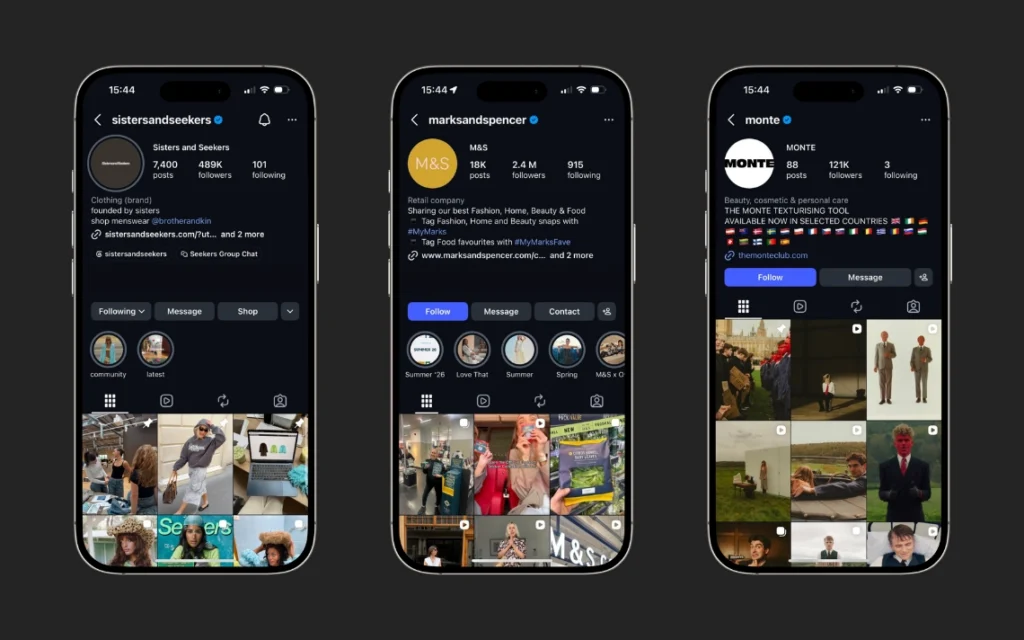
Your audience wants useful tips, relatable content, behind-the-scenes content and posts that feel human and real. The brands that do this have strong engagement, build trust and grow communities over time. Brands that are doing this really well are Sisters and Seekers, M&S and Monte, with a mix of fun, entertaining content and user-generated content to new product launches; their content doesn’t feel like a sales pitch, even when they are promoting their products.
Followers feel part of the brand, rather than just customers. They can build strong communities through engaging and fun behind-the-scenes content where the audience feels like they are getting exclusives behind the brand. The majority of their content isn’t salsey or may not even feature the products, but by creating this type of content they build a community where people resonate with the brand and want to feel part of that community, causing an increase in engagement. If you resonate well enough, you will even have people waiting for you to post.
Implementing The 80/20 Rule
Before you make any major changes, you should do an audit of the last 6 months and see what performed well, what got the most interactions and engagement. We don’t want to stop doing anything that works well for your brand.
Start by categorising your content by topic, e.g., entertainment, educational, promotional. You may realise you have already been doing the 80/20 rule. Test and tweak, what works and doesn’t, what type of value-driven content performs best?
Does the promotional content convert better with the 80/20 rule applied after educational content? Every business is different, and what works for one business may not work for yours, some weeks you may lean promotional, especially during product launches or seasonal campaigns, but what is important is to stick to the 80/20 rule overall.
Conclusion
Whilst people don’t want to be sold to 24/7 when scrolling on Instagram or Facebook, there is also a certain way to do it that doesn’t feel like you are being sold to at all. That is the 80/20 rule. You want 80% of your content to give and 20% of your content to ask.
Applying the 80/20 rule can foster real connections, engage with the right people and build trust. When your audience trusts you, your sales content doesn’t feel like sales content anymore; they will buy into the brand. When you educate, entertain or help people solve problems, you build trust naturally.
If your content mix doesn’t feel like it’s working, a simple shift is very effective. If you give people a reason to care about your brand before you push them to buy, you are more likely to see long-term results. If you want to improve your content mix and start seeing long-term results, let’s chat.